
Ancient Sounds X Future Focus: Fusion’s Superorganic Vision
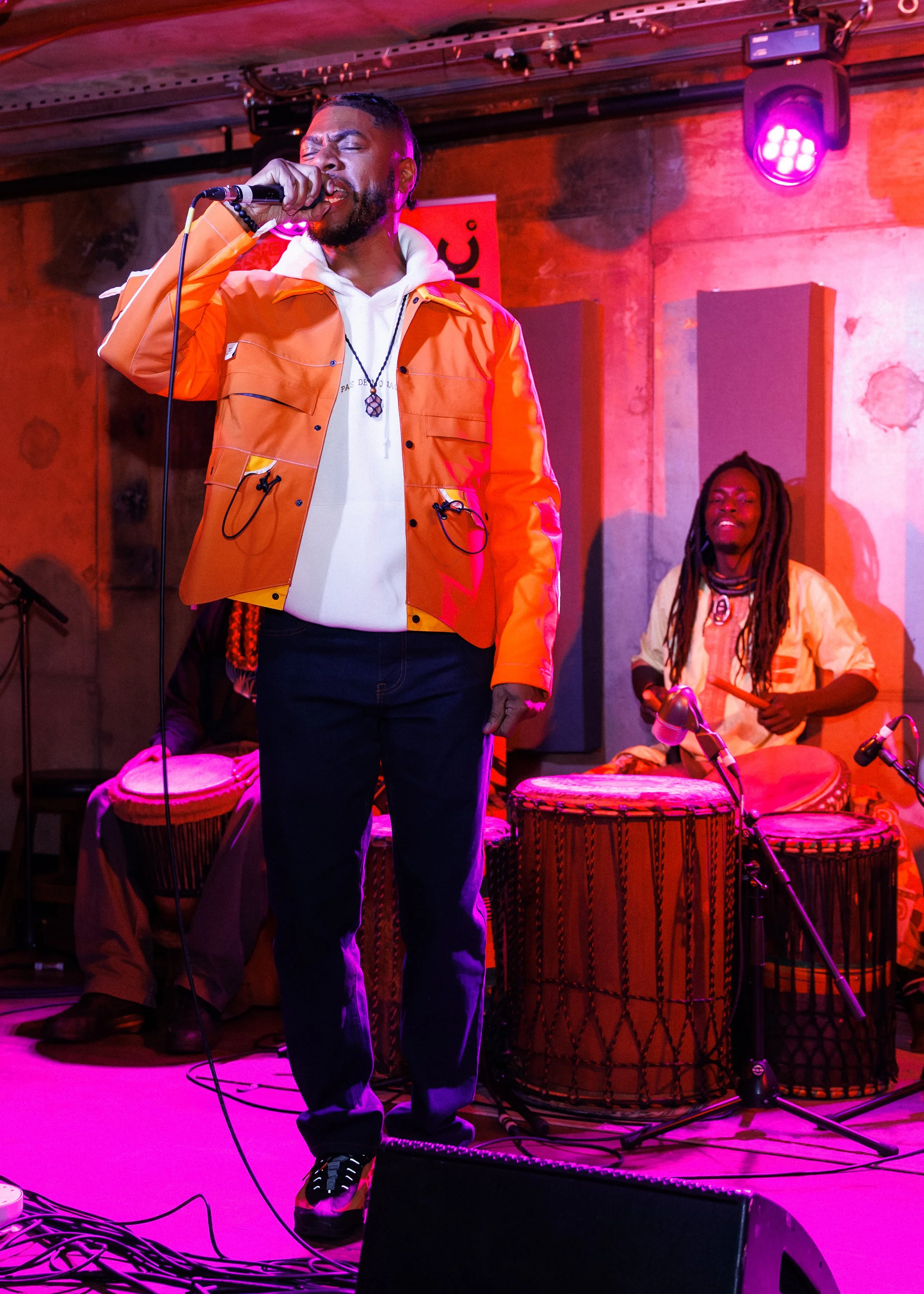
Photo Credits: Poet Curious
There is something ingenious orchestrating a Ney flute and a steel pan speaking to one another: one carries over 5,000 years of history; the other a recent addition to the world’s instruments, a radical emergence from post-colonial Trinidad through discarded oil barrels transformed into one of modern music’s most emotionally resonant sounds. Within the upcoming Superorganic event Ancient Sounds x Future Focus at Rich Mix 22nd May, Alain ‘Fusion’ Clapham has curated a space where these instruments are not separated by geography, generation or chronology, they are collaborators. That idea sits at the centre of music through time in celebration of World Buy An Instrument Day, bringing a night rooted in the belief that music can collapse centuries, borders and lived experiences into an exciting yet profound experience.
Speaking with Fusion, it becomes evident Superorganic is not simply an event series, but a force that brings people together. Reflecting on the moment the concept first arrived to him, he recalls watching steel pannist Marlon Hibbert and Palestinian Ney player Faris Ishaq improvising together during a residential. Observing in awe, Fusion considered “what would it be like to tell a story of how music brings us together from different times and different places?” For Alain, storytelling remains central to everything he creates. “I love good stories,” he says, “Why are we coming together unless it’s sharing something meaningful?” In an era increasingly shaped by disposable content and shrinking attention spans, Superorganic feels intentionally resistant to speed. “Every show is a story,” he explains, “If you’re gonna buy a ticket, put on your favourite clothes, meet your favourite people, and come and see us, I want you to leave with a memory.”
Fusion resists the label of promoter, instead describing himself as a “transformative storyteller.” With his depth of experience spanning from but not limited to journalist, educator, musician, presenter and creative producer, he brings a valuable widened perspective to the industry. A distinction that makes sense once he begins unpacking the emotional architecture behind Superorganic. Every part of the experience is carefully considered: the pacing of performances, artist sequencing, live conversations between sets and even the way audiences are introduced to musicians throughout the night. Drawing inspiration from vinyl culture, the structure itself operates through A-sides and “B-sides. “The A-side is the song that makes you fall in love with the artist,” he expresses, “then the B-side is ‘get to know me.’” In a culture increasingly shaped by fragmented listening and endless skipping, the format encourages audiences to remain present long enough to deepen their understanding of both the music and the people behind it. “No, you didn’t miss the set,” he laughs while recalling previous audience reactions. “You missed my A-side.”

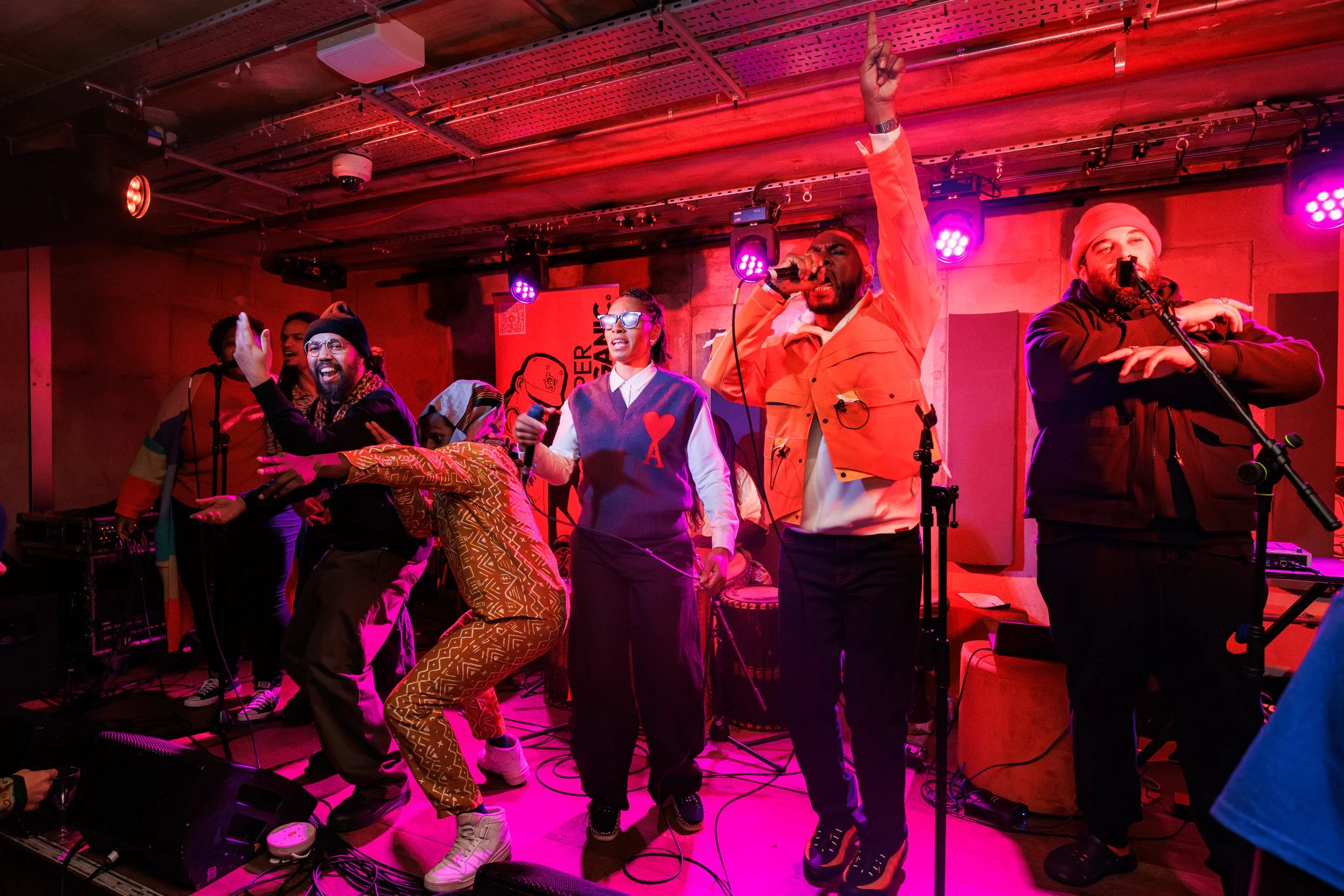
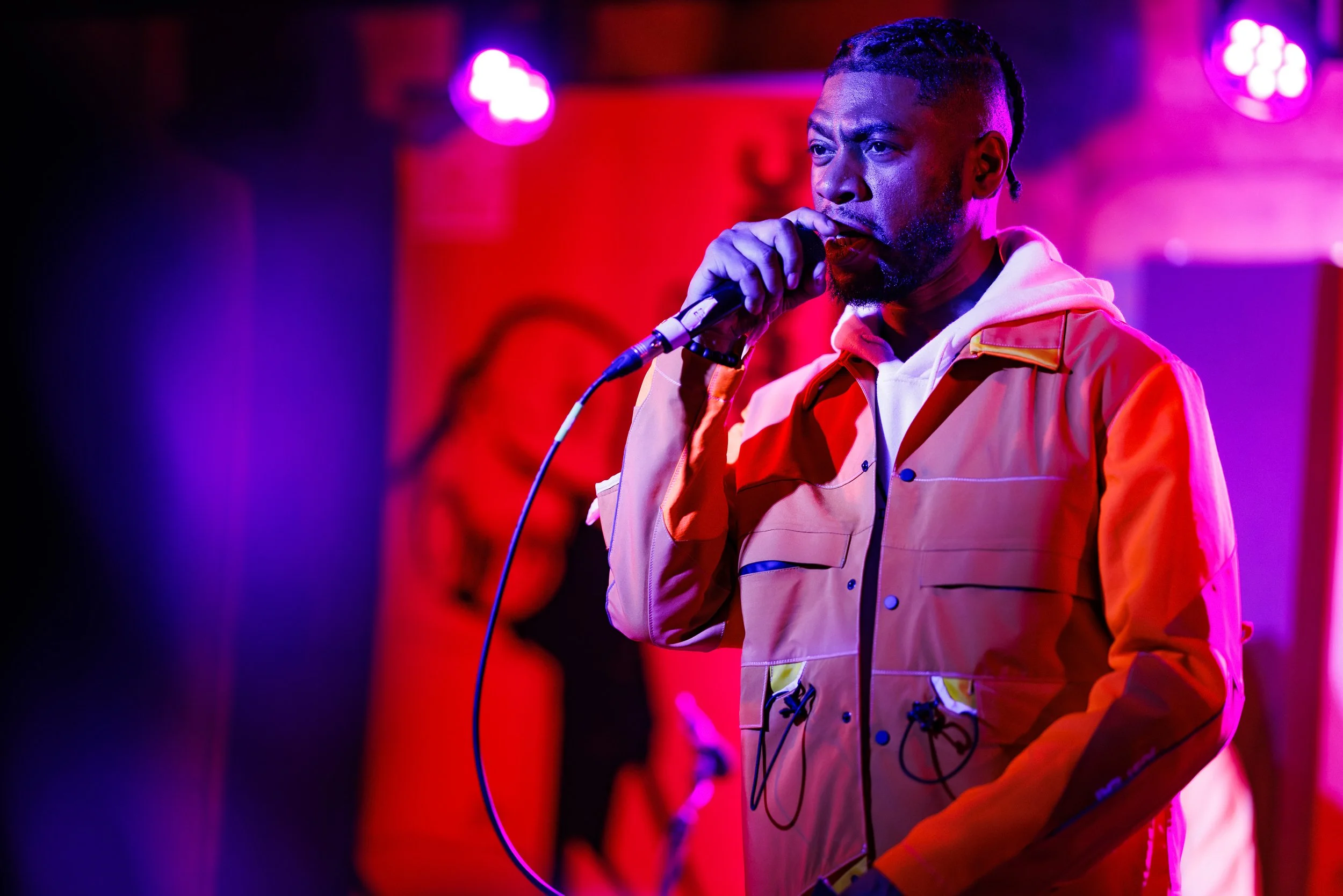
Beyond the performances themselves, Superorganic also creates space for conversations around migration, resistance, cultural inheritance and creative survival. For Fusion, music is not simply entertainment. “Music is a medium. It’s a means to move us into different frequencies and behaviours.” The language he uses consistently leans toward transformation rather than spectacle. “I want people to leave with a feeling in their bones that something happened, something meaningful.”
Ancient Sounds x Future Focus was curated around the sentiment of exploration and expansion through an elevated experience. In the line up of features for the evening are musicians Biro and Apex Zero, and poets Ay Hearts and Mz B Ryan, each bringing powerful artistic performances which transcend audiences into their craft of world-building, a journey of authentic expression and versatile talent. Faris, raised in Bethlehem before relocating due to conflict, carries generations of Middle Eastern musical tradition through the Ney. Fusion speaks about him with endearing respect, not simply as a musician but as someone preserving cultural memory through sound. “What can you say with a Ney that perhaps you can’t say with words?” he asks. Opposite him sits Hibbert’s steel pan, an instrument born through reinvention and resistance after the British colonial departure from Trinidad. “They said, ‘You can keep the barrels,’” Fusion explains. “Then people thought, ‘Alright, let’s see what we can do with them.’”
For Fusion, both instruments become living archives of displacement, migration and survival. “There’s a beautiful alignment between those two stories,” he says. In many ways, the event mirrors contemporary Britain itself - layered identities, diasporic histories and communities constantly reshaping culture through pressure and reinvention. Referencing the social climate, venue closures and wider feelings of instability, Fusion frames creativity as a form of resistance. “The front line for the battle we’re facing is imagination,” he says. Not imagination as escapism, but imagination as infrastructure, survival. “If you believe you’ve lost, you’ve already lost.”
Rather than romanticising struggle, Fusion speaks about creative pressure as something historically capable of generating innovation. He references pirate radio, warehouse rave culture and DIY music communities as examples of people building spaces when traditional systems excluded them. “When people couldn’t access spaces, they created warehouse raves,” he says. “We’ve always been a rebel culture.” That ethos sits deeply inside Superorganic’s DNA. “I don’t want people leaving feeling disempowered at a time when they should be picking up revolutionary tools to create spaces,” he explains. “If there’s no space, then I have to create it.”
That same philosophy extends into his thoughts on community and belonging. Throughout our conversation, Fusion repeatedly returns to the idea of “home.” Not in the physical sense alone, but emotionally and communally. He recalls how his mother unknowingly helped him build his first cultural space simply by allowing him to transform parts of the family home into environments where people could gather. “I’ve never stopped doing that,” he says. Today, that instinct continues through Superorganic. “It feels like a home, I want everybody to feel seen together.”
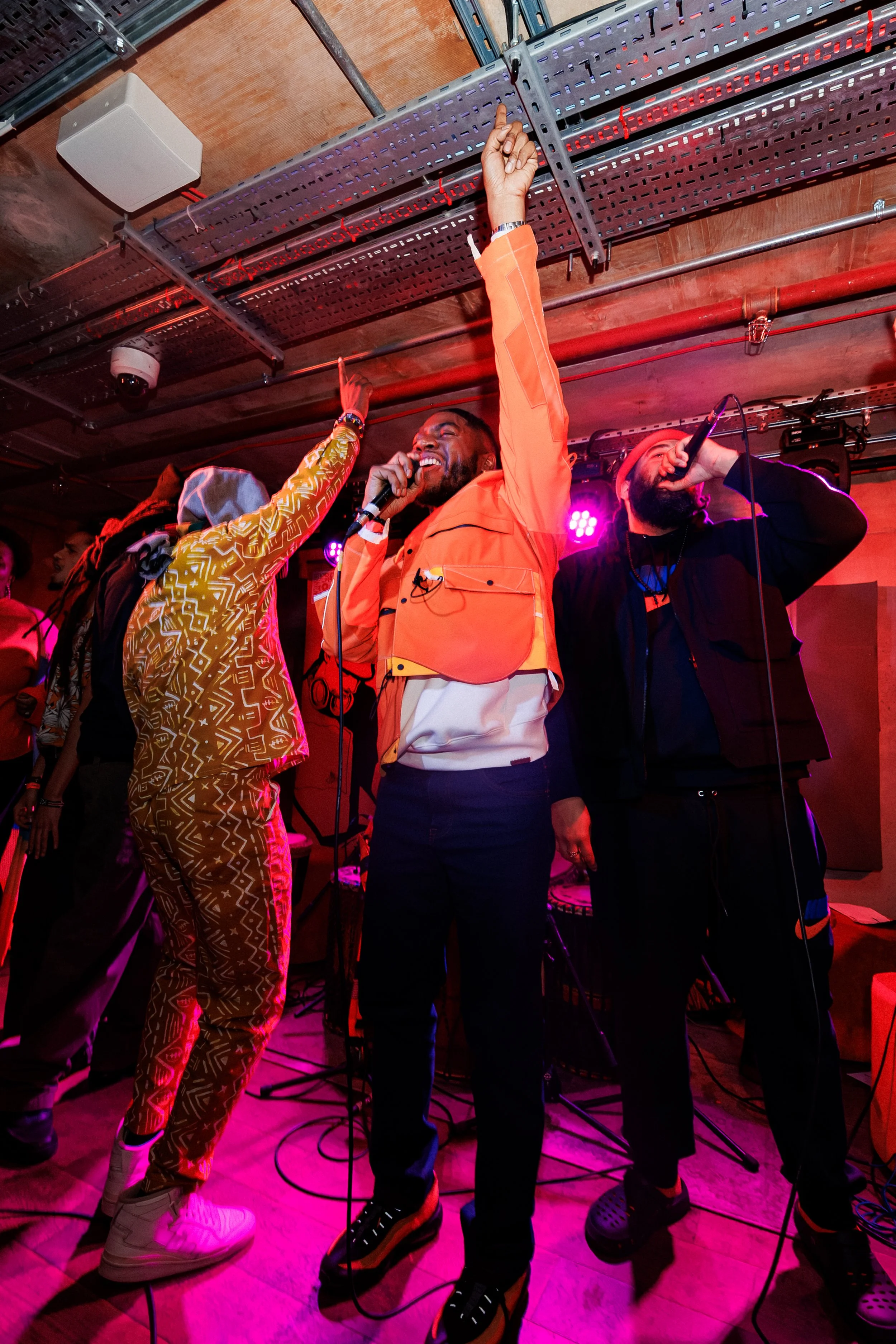
The word “superorganic” itself reflects that thinking. Borrowed from scientific terminology, it describes something that cannot operate without all of its elements functioning collectively. Fusion lights up while speaking about the audiences now forming around the nights. Teenagers attend alongside elders in their seventies. “One of our oldest supporters comes to every show,” he says. “If she can’t come, she gives the ticket away because she wants someone else to experience it.” That intergenerational energy feels intentional. “Music is ageless,” Fusion shares with a spark in his eye, “Music is timeless.”
The conversation organically widens into discussions around cultural memory and institutional recognition, particularly surrounding Black music history in Britain. Fusion speaks candidly about the ways Black creativity is often celebrated aesthetically while remaining under-recognised institutionally. Referencing figures like British jazz musician Courtney Pine and wider conversations around genres; grime, hip-hop and steel pan culture, he questions who gets written into official history and who quietly disappears from it. He points to Hibbert’s efforts to reposition steel pan beyond reductive assumptions and into formal music education spaces. “He wants institutions to understand this is not just a carnival instrument,” Fusion explains. “This is a serious art form.”
Before Superorganic became what it is today, Fusion himself stepped away from music entirely after becoming disillusioned with aspects of the industry. Redirecting his focus into education and broadcasting, he eventually helped establish a school while continuing to mentor young people creatively. But after years spent encouraging others to pursue their passions, he realised he had stopped following his own advice. “I looked in the mirror and thought, ‘Why are you not doing the same thing you’re telling young people to do?’” Four years ago, he bought a drum machine and committed to creating again. What began as basement sessions with friends slowly evolved into Superorganic. “People turned up. People stayed,” he recalls, “then eventually we thought, maybe instead of playing other people’s music, we should make our own.”
As our conversation nears its end, Fusion speaks about Superorganic almost as though it exists independently from him now. “I work for it, I give my everything to it.” What began as an attempt to create a space he himself could not find has grown into something far larger than a single event or curator. “This thing isn’t me and it isn’t you,” smiling with a sense of pride as he closes, “it’s the feeling and what we create together.” Perhaps that is ultimately what makes his series feel distinct: it is less concerned with nostalgia, but rather how we look at possibility, a living experiment in what happens when music stops functioning as background noise and instead becomes infrastructure for imagination, connection and collective memory.