
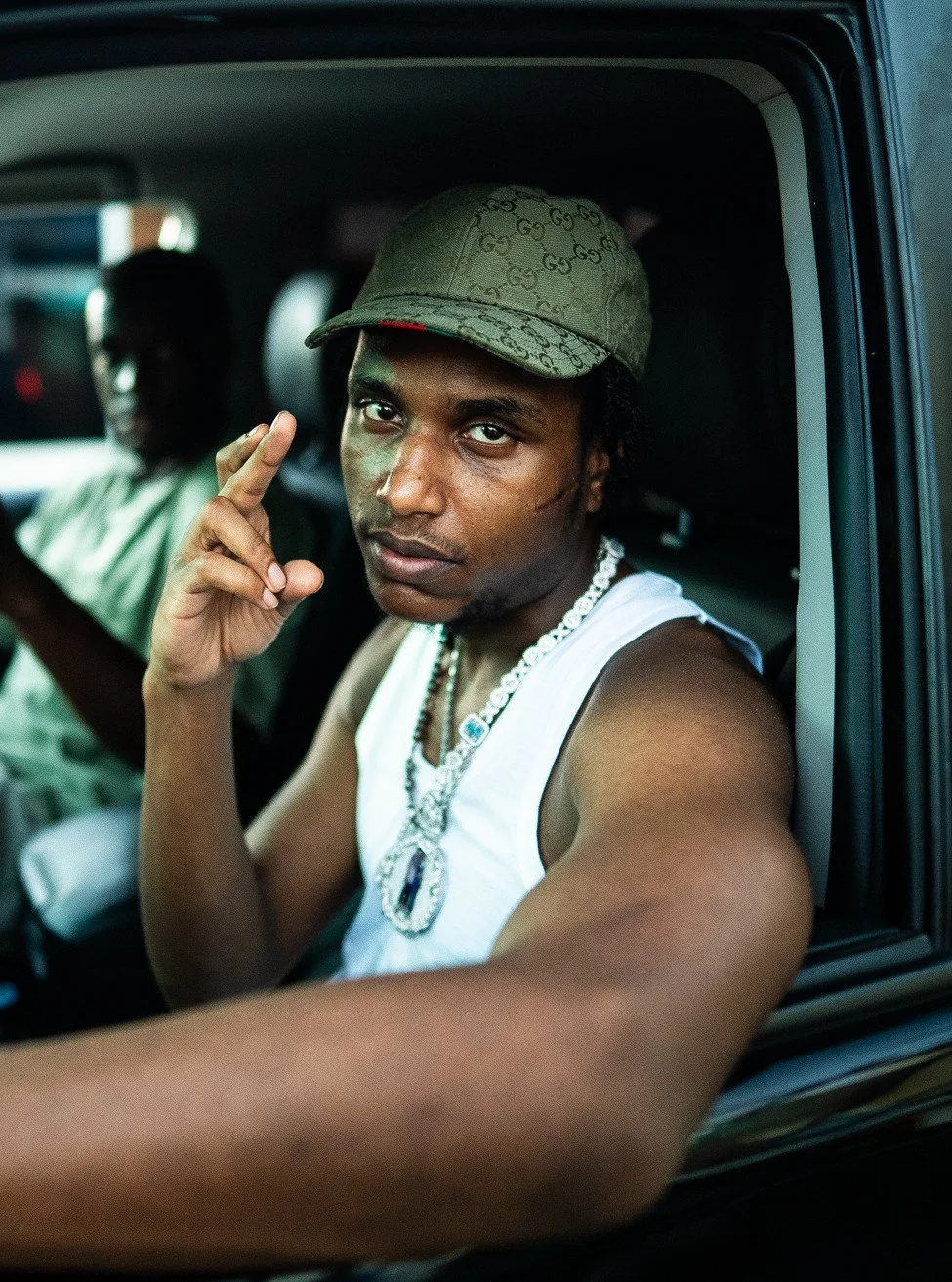
Birmingham's Marnz Malone has carved out a remarkable path through UK rap, building a loyal following with his deeply personal storytelling, unfiltered lyricism and an unwavering belief in his own abilities. Following the success of his latest project, I Wish I Could Sing, Wordplay Magazine caught up with the rapper to discuss his musical upbringing, life after prison, the importance of authenticity, the arrival of the first official UK rap chart and why his journey has always been about something much bigger than music.
For Marnz Malone, music has always been deeply rooted in his upbringing. Growing up surrounded by the sounds his mother would play in the car, his earliest musical education came through her enthusiasm for discovering new artists and keeping up with the latest releases. Those formative experiences would eventually develop into a passion that shaped not only his musical tastes but his outlook on life.
As he grew older, artists including Nines, Lil Durk, Stardom and Kaymuni became important influences, particularly those whose music reflected experiences and environments he could recognise. Their impact helped shape his approach to storytelling, something that remains central to his identity as an artist.
That authenticity runs throughout I Wish I Could Sing, a project boasting collaborations with the likes of J Hus, Skillibeng, Clavish and Teeway. Despite the impressive line-up, Marnz explains that these weren't collaborations engineered simply to attract attention. Instead, they developed through genuine relationships and mutual respect.
"All of those collaborations came about naturally," he tells Wordplay Magazine. "Every name you listed is someone I've met in person or someone that I would consider my friend."
Perhaps the most fascinating aspect of Marnz's story is how he developed his artistry while serving time in prison. During that period, music became both an emotional outlet and a means of processing his circumstances. With time to reflect, he developed a writing process that allowed him to build an extensive catalogue of material, often having another project written before the previous one had even been released.
"They said I needed to have sessions with a therapist, and they didn't know that the music was my therapy while I was in there," he reveals. "It was my little outlet."
Since regaining his freedom, however, the creative process has changed considerably. Balancing everyday life with the demands of a growing music career has presented new challenges, while spending time in the studio alongside J Hus has encouraged him to approach songwriting differently.
Recalling a session that produced the Yaqeen track 'Splashing', Marnz describes watching J Hus sit down and write his lyrics directly in the studio, rather than arriving with everything already prepared. Inspired by the experience, he began adopting a similar approach, allowing his writing to develop more spontaneously.
While his own career continues to gather momentum, Marnz remains determined to create opportunities for the next generation. Across his projects, he has made a conscious effort to introduce emerging artists to his audience, providing a platform for voices that might otherwise struggle to gain recognition. It's an initiative he intends to develop further through a recurring feature titled 'Shoot Your Shot'.
"Once upon a time that was me," he explains. "It's important to make sure you never forget where you're coming from to know where you want to go."
That sense of perspective is particularly evident when the conversation turns to the meaning behind his music. Rather than simply documenting experiences, Marnz views his releases as chapters in a much wider personal journey.
His trilogy of projects, Maktub, Sabr and Yaqeen, represents three principles that have guided him through some of his most challenging moments. Maktub translates to 'it was written', Sabr represents patience, and Yaqeen signifies belief or certainty. Together, they form a philosophy that extends far beyond his recording career.
"I believe that it was written for me to live the life I lived," he explains. "I then had to sit down where I was inside and have Sabr, which means patience. And then in the midst of the patience, I had to also have Yaqeen, which means belief or certainty, that one day this would end and one day I'd be here."
It's an incredibly personal perspective and one that helps explain why his music resonates so strongly with listeners. For Marnz, there is no separation between the artist and the individual behind the microphone.
"I rap very in depth. And I rap with purpose," he says. "I rap my life. It's very much just like a personal journal."
His Birmingham roots are another important part of that identity. Reflecting on the evolution of UK rap, Marnz remembers a time when British artists frequently adopted American accents, contrasting sharply with today's landscape, where regional voices and identities have become increasingly celebrated.
He believes that coming from Birmingham has given him a distinctive place within the scene, particularly in an industry historically dominated by London artists. Rather than disguising his accent or background, he embraces both as essential parts of what makes his music recognisable.
It's during this discussion that Marnz also shares a particularly exciting development for the wider UK rap scene, revealing to Wordplay Magazine that he has been approached to announce the first official UK rap chart.
"We've come a long way," he explains. "We've come from an era where people were rapping in American accents to where now I'm being asked to announce the first official UK rap chart."
For Marnz, the development represents another significant milestone in the genre's evolution. Having witnessed British rap grow from a relatively overlooked corner of the music industry into a powerful cultural force, the prospect of a dedicated official chart is something he sees as a reflection of just how far the scene has progressed.
It's also a moment of personal significance for an artist whose own journey reflects the changing possibilities within UK rap. From building his reputation while incarcerated to collaborating with some of the country's most recognisable names, Marnz has experienced that transformation from a perspective few others can offer.
The growth of UK rap is something he has witnessed first-hand, from an era when even some of the country's biggest rappers struggled to achieve substantial financial success to a scene now capable of producing internationally recognised stars. His own ambitions reflect that changing landscape, with Drake, Lil Durk and Meek Mill among the artists he hopes to collaborate with as he looks towards expanding his audience in America.
Away from music, Marnz is equally focused on making the most of his freedom. Having missed out on significant periods of everyday life, spending time with loved ones and enjoying new experiences have become priorities. Whether playing football, swimming, boxing or training in MMA, he is keen to embrace the opportunities available to him.
Even his listening habits offer an insight into his world. Alongside unreleased material from artists such as Kaymuni, he reveals that Prince Swanny has been dominating his playlist, with much of his music listening taking place while travelling rather than at home.
As the conversation draws to a close, Marnz offers a piece of advice to anyone hoping to establish themselves in the music industry, returning once again to the philosophy that has underpinned his own journey.
"Just be yourself and do whatever works for you. Most importantly, just believe in yourself," he says. "Because they'll call you crazy until they call you a genius."
It's a sentiment that feels particularly fitting coming from an artist who began building his career in circumstances where many would have struggled to imagine a future in music.
For Marnz Malone, the journey from prison to becoming one of Birmingham's most compelling rap voices has been shaped by resilience, patience and an extraordinary level of self-belief. His story is far from finished, but one thing is abundantly clear: every chapter has a purpose, and every experience has contributed to the artist he is today.
As he continues to push forward, Marnz Malone remains living proof of the very philosophy that defines his music: what is written requires patience, but above all, it requires belief.
Words: Ed Lindsay