aja monet on Poetry’s Intricate Dimensional Presence
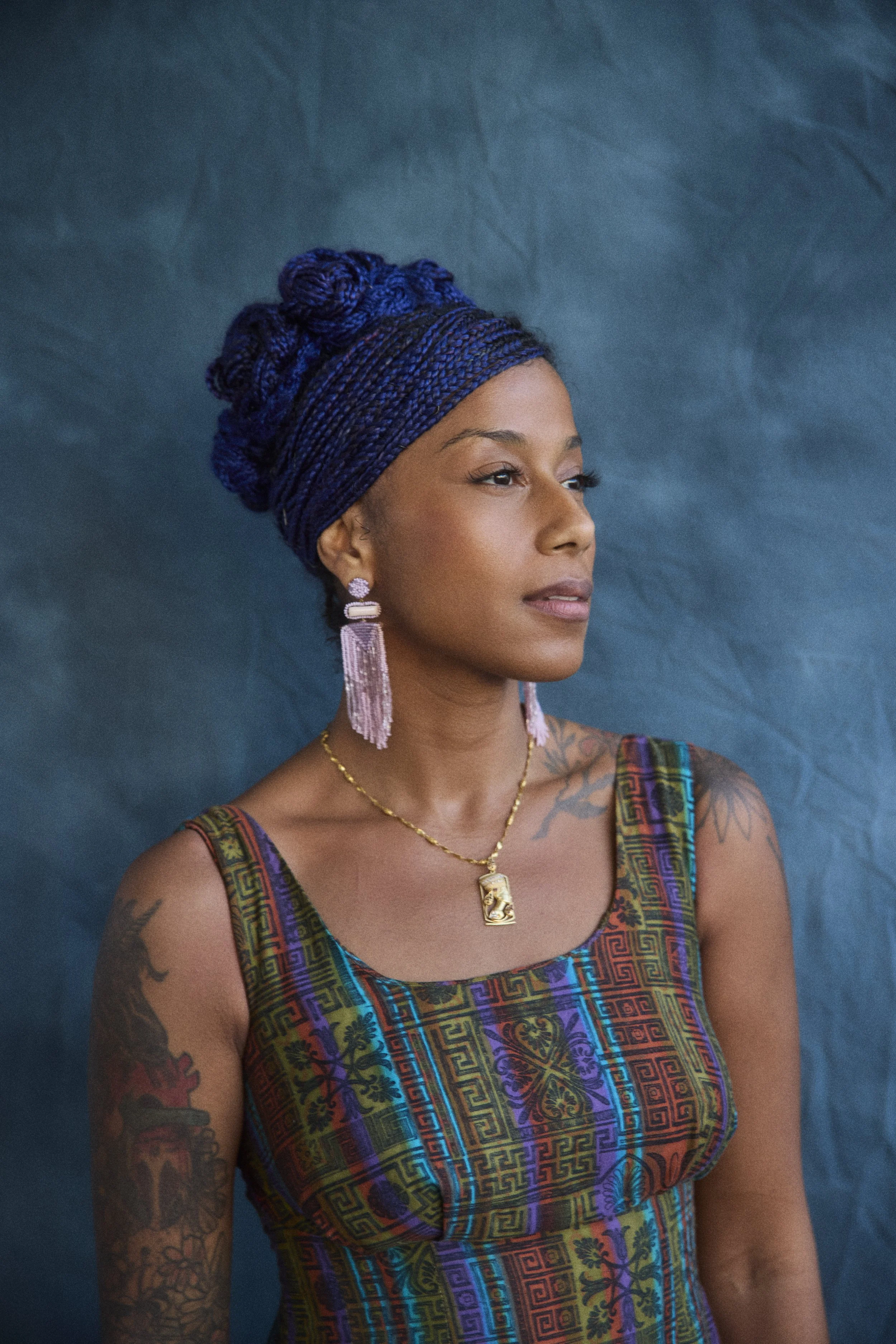
Photo credits: Daniel N. Johnson
Ahead of her second album ‘the color of rain’, out 22nd May via Drink Sum Wtr, aja monet frames its heart as devotion to sincerity, “the impetus of the work is presence, a deep divine love for a sense of being.” It’s a grounding both spiritual and embodied, a practice of attention rather than being categorised as opposition, yet aja acknowledges that the association of resistance emerges “out of the necessity to assert your humanity and a sense of presence." The tragedy, she notes, is that audiences often latch onto the struggle rather than the source; “It's unfortunate that is the takeaway a lot of people tend to have, rather than to assert one's love of self and dignity.”
aja offers a deeper, expansive truth: work rooted in devotion, care, community and the sacred act of connection - testament to feeling, witnessing, existing with intention. A stunning project of 15 compositions follows her debut album of 2023 ‘when the poems do what they do’. Though this creative offering has a unique shape and sound, the trademark through‑line resounds the idea of art as necessity and “comes from a place of trying to make sense and find meaning in the world.” Vulnerability, for her, is not a political stance in itself but a spiritual encounter “where you meet yourself.” Where expression becomes communion with self and others, with forces “seen and unseen,” rare moments where you “commune with God,” and if you’re fortunate, “you get to share that with others. It's in the sharing vulnerability comes to be,” expression inherently evocative as it reaches outward.
The concept of time itself is challenged within this project, with single ‘melting clocks’ featuring Mick Jenkins and Vic Mensa; “the way they [musicians] are playing the music is literally bending and warping time.” Yet aja’s work functions as a time capsule, capturing the “surrealism and absurdity” of recent events, the track ‘hollyweird’ standing out for this very reason; a mirror held up to cultural disconnection, emotional numbness, and the fragmentation of attention. In an era shaped by “the culture of hyper individualism, capitalism on steroids,” she observes a society that responds to tragedy “very robotically.” Attention for monet, is a moral act, “If you're truly paying attention, you can see patterns… where we keep getting it wrong and ask, who's invested in us getting it wrong?” The work of art and the work of living becomes a practice of accountability to “cultivate a society that understands the values for making things better,” but aja proposes, for whom? Often framed as an activist, aja directly challenges this label; “I don't think activist is actually accurate, [caring] is a natural human instinct, I don't think that makes you special or unique, it makes you a sentient being.”
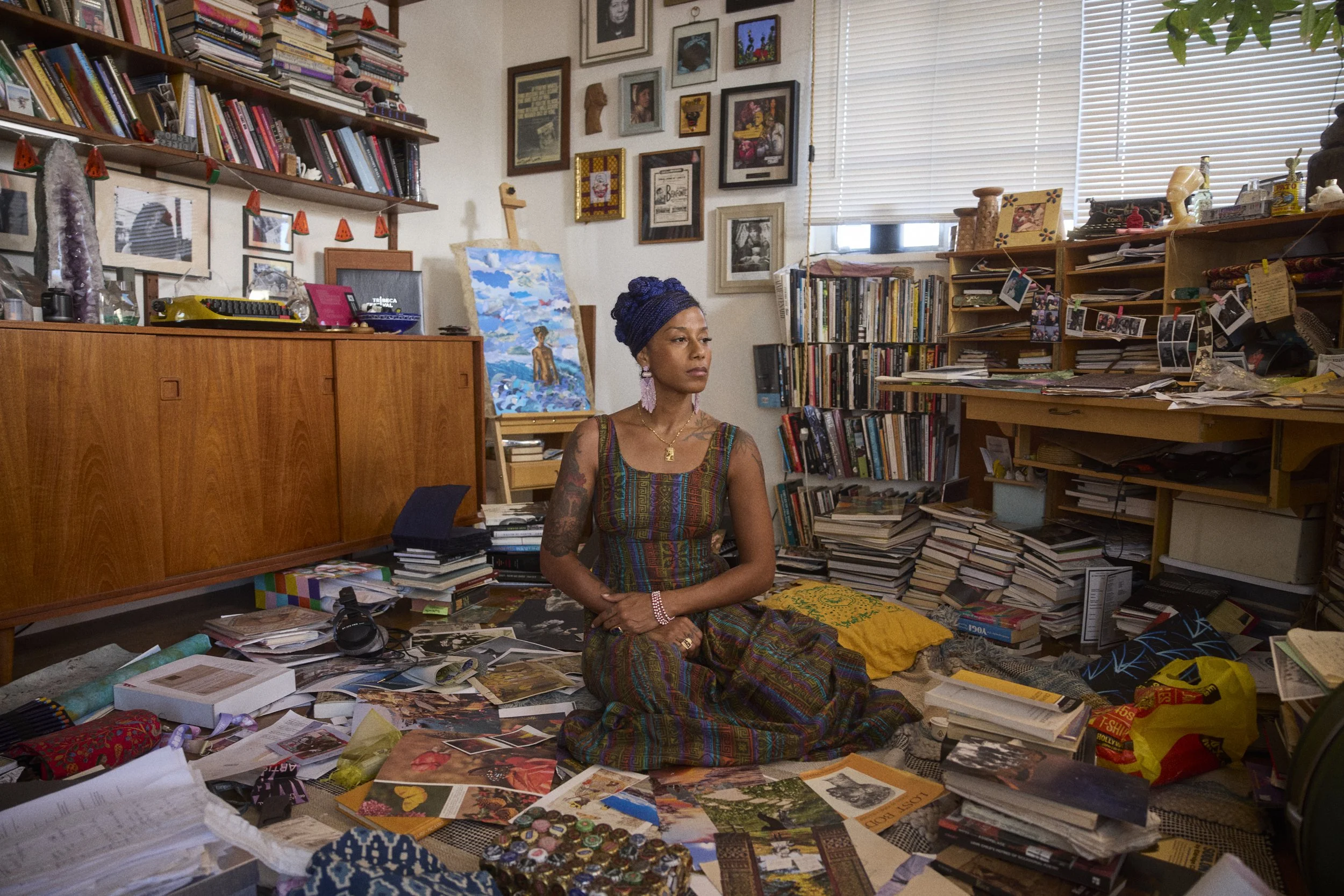
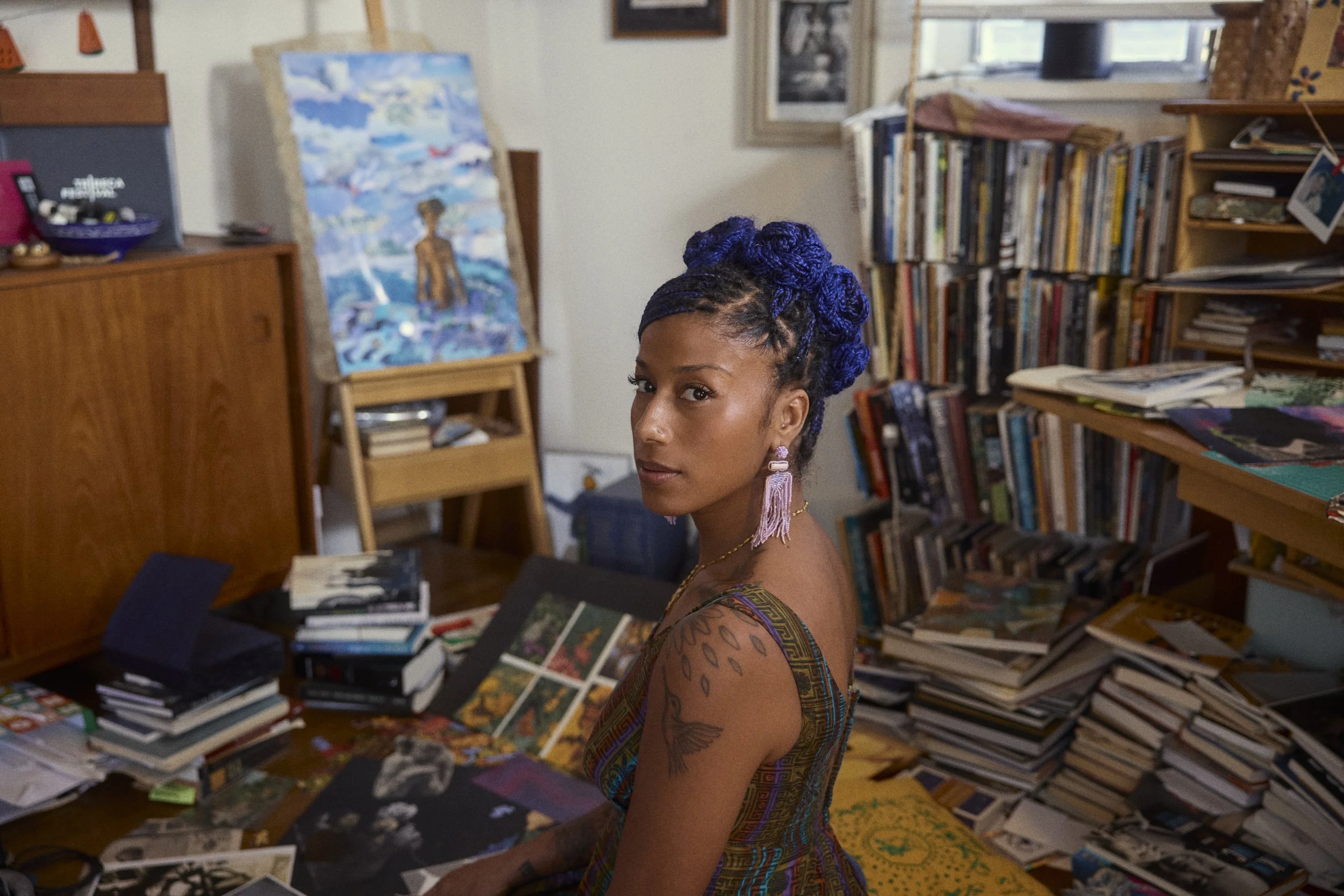
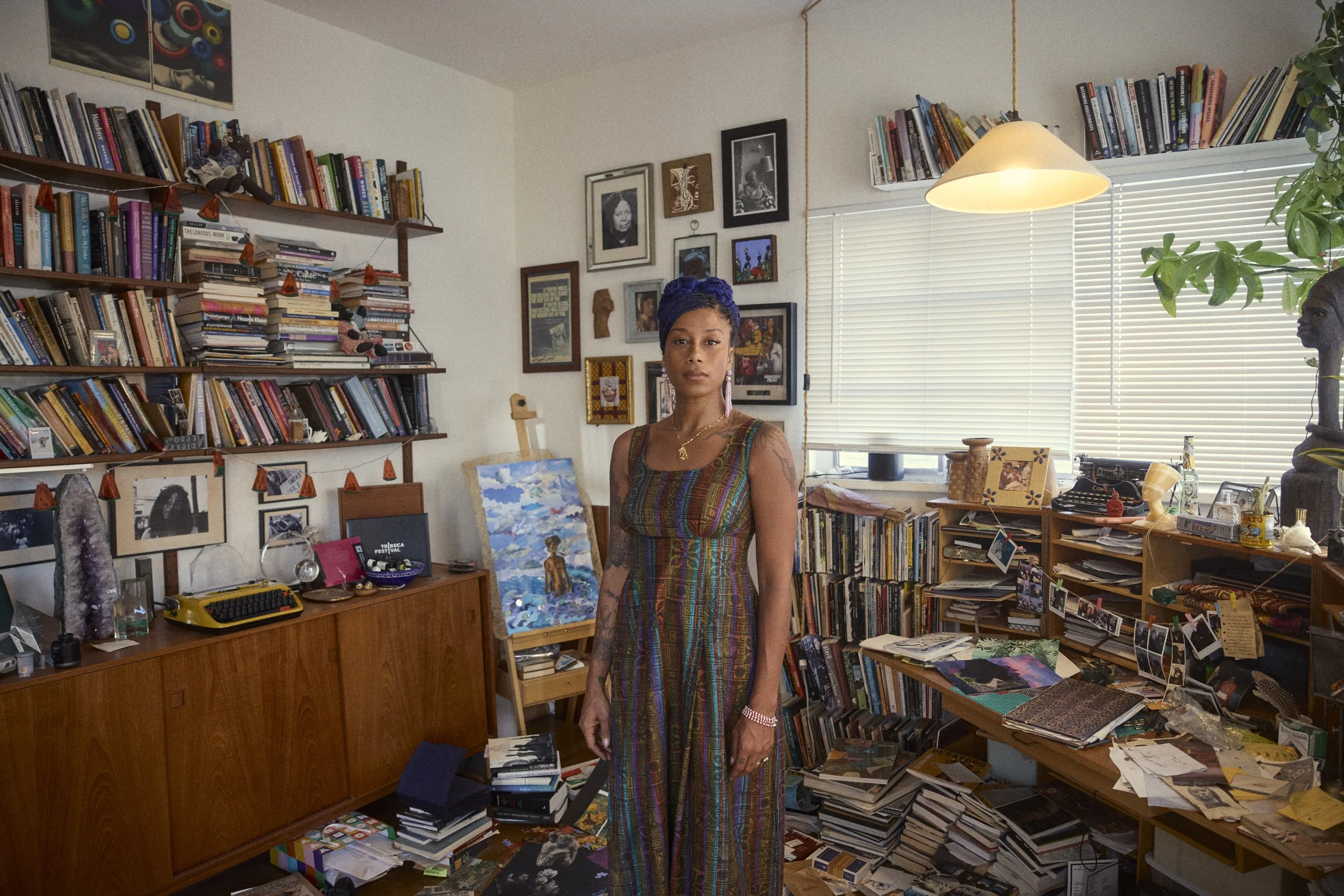
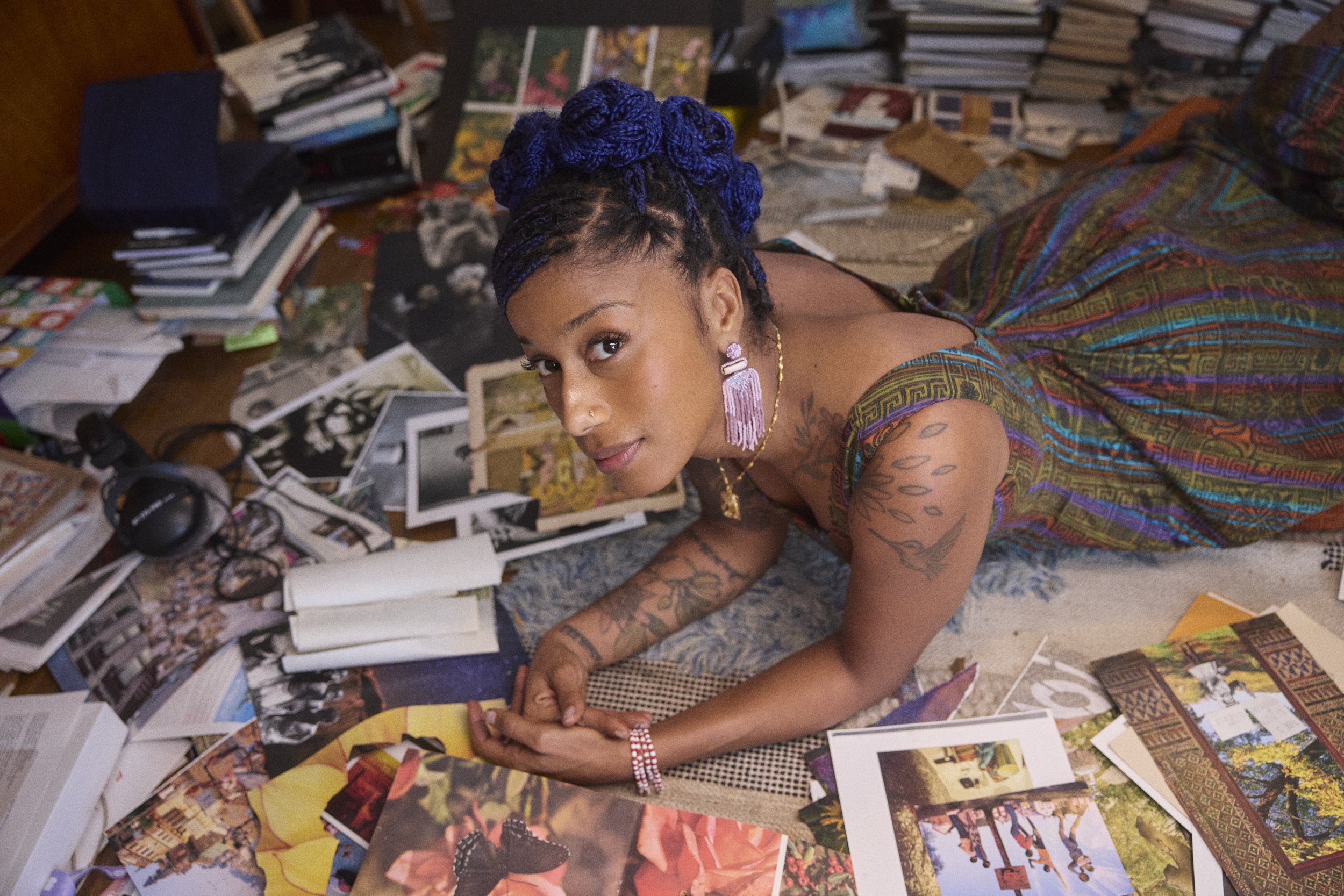
Collaboration, in her world, is a sacred practice rooted in sincerity, humility, and shared intention, sharing “I'm a reflection of all the people who poured into me.” Mentorship and fellowship is not an accessory to artmaking; it is its lineage, where aja expresses working with artists Meshell Ndegeocello and Georgia Anne Muldrow among others on the album, she chooses “collaborators that stay students, that always come to the craft with a willingness to learn, understand, question and delve deeper into that learning practice.” aja comes from a tradition of poets who were “teachers, educators, organization founders, workshop facilitators… people that were cultivating space, creating space, expanding space, trying to maintain and pass on traditions,” growing up in a community with people who actually invested in their community. aja, with warm fondness in her tone describes “poetry spaces were the spaces that politicized me because poets were the ones speaking to the vein of the moment.” Classrooms, open mics, community hubs were places she first understood “the willingness to participate is the true measure of anyone's intelligence.” These third spaces, many of which have been lost to economic pressure and the pandemic, were where “many poets come to be, and come to find community.”
For aja poetry is inseparable from its cultural lineage, where the personal and political are never singular. “The ‘I’ is deeply interconnected to the ‘we’.” In her homage to the artform aja goes into the origins of the craft, “the first poet was a griot, an oracle, the person that's speaking to the moment,” Rejecting rigid academic ideas of what qualifies as “literary,” she emphasises how African poetic traditions rely on tone, vibration, rhythm, alliteration, repetition and emotional resonance as essential poetic devices crafting meaning through feeling, context and cadence rather than privileging wordplay alone, and speaks strongly on infiltration within artistic practices to “get people away from commenting on the world.”
Art cannot be forced; “It's never something that can be dictated;” but a transmission of discovery. Poetry can be journalistic reflecting moments in time, yet taking it to another dimension with presence and the intricacies of meaning. Great poetry “zooms you into the details” so larger questions of life, love, grief, fear can be approached with clarity, maintaining “enough closeness to truth to speak it, and enough distance to offer meaning.” At the heart of it all is reciprocity, a word aja passionately recounts as one of the great offerings conceptually introduced to her through the works of Lauryn Hill. “Love is an action. Love is as love does.” Community requires participation, investment, and care, “Are you invested in the social, spiritual, physical well-being of one another?” She urges a shift from scarcity to possibility: “There's so many untapped skill sets within our community,” and the question evolves: “How do we democratise that? How do we build shared capacity? We actually have each other. Let me help you carry this load.”
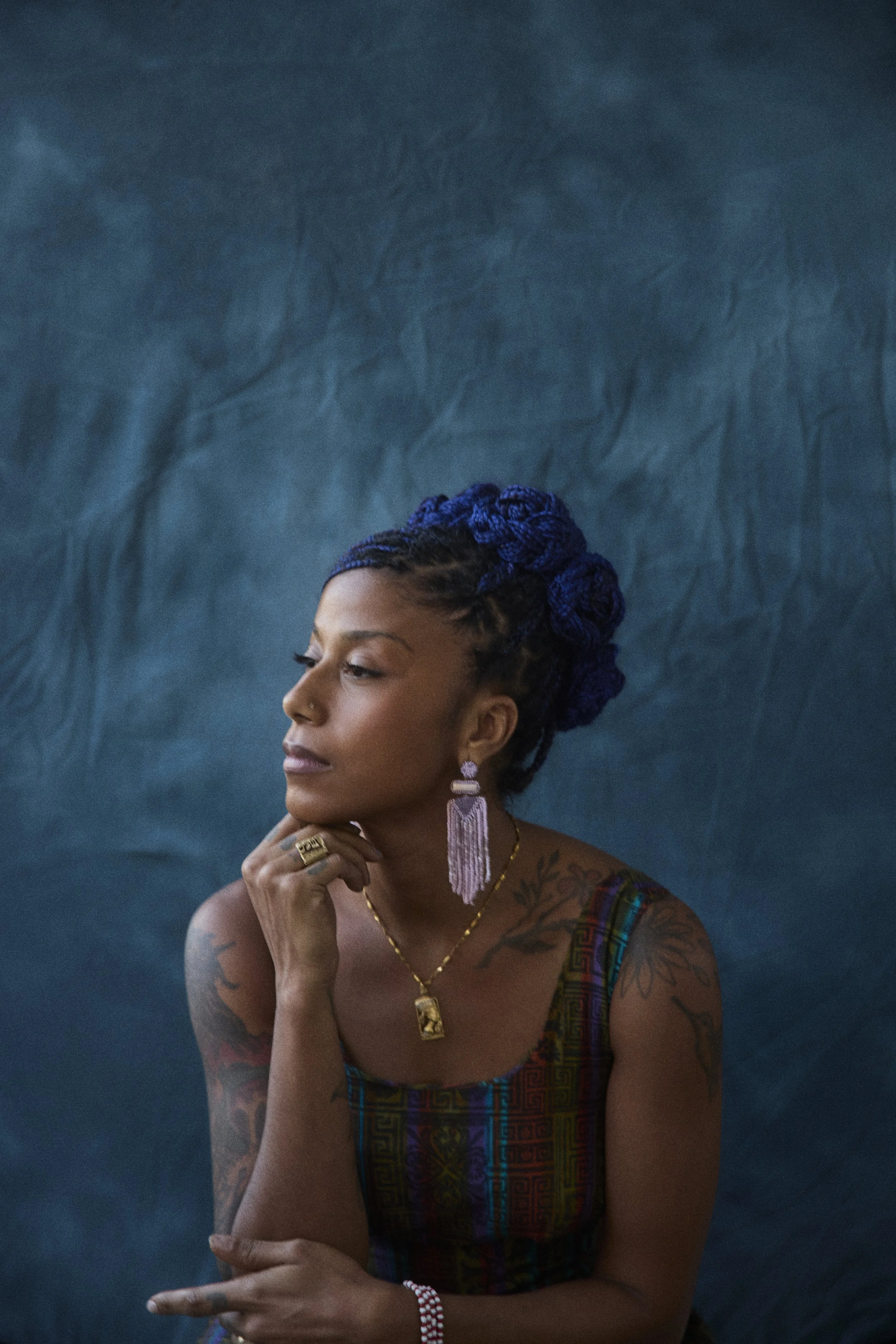
aja eloquently details poetry as the highest expression of artistic depth; “You measure craft based on its poetry,” whether cooking, dancing, or painting, to say someone ‘creates like a poet’ uplifts works into sacred territory and “elevates the relationship to depth.” Poetry is foundational because sound itself is foundational: “The first thing you learn of in the womb before you ever see anything is sound. Sound is the way that we experience the world initially.” As long as poetry is present, she says, “it's alive in a new way.”
‘the color of rain’ challenges the spiritual quality of what we choose to celebrate, to witness, to build. Art becomes a reflective body, rippling outward as a record, a guide - the question aja leaves us with is nuanced simplicity:
“Do we like this mirror?”