
Truman - Kid Raise Kid (Album) + 10 Questions
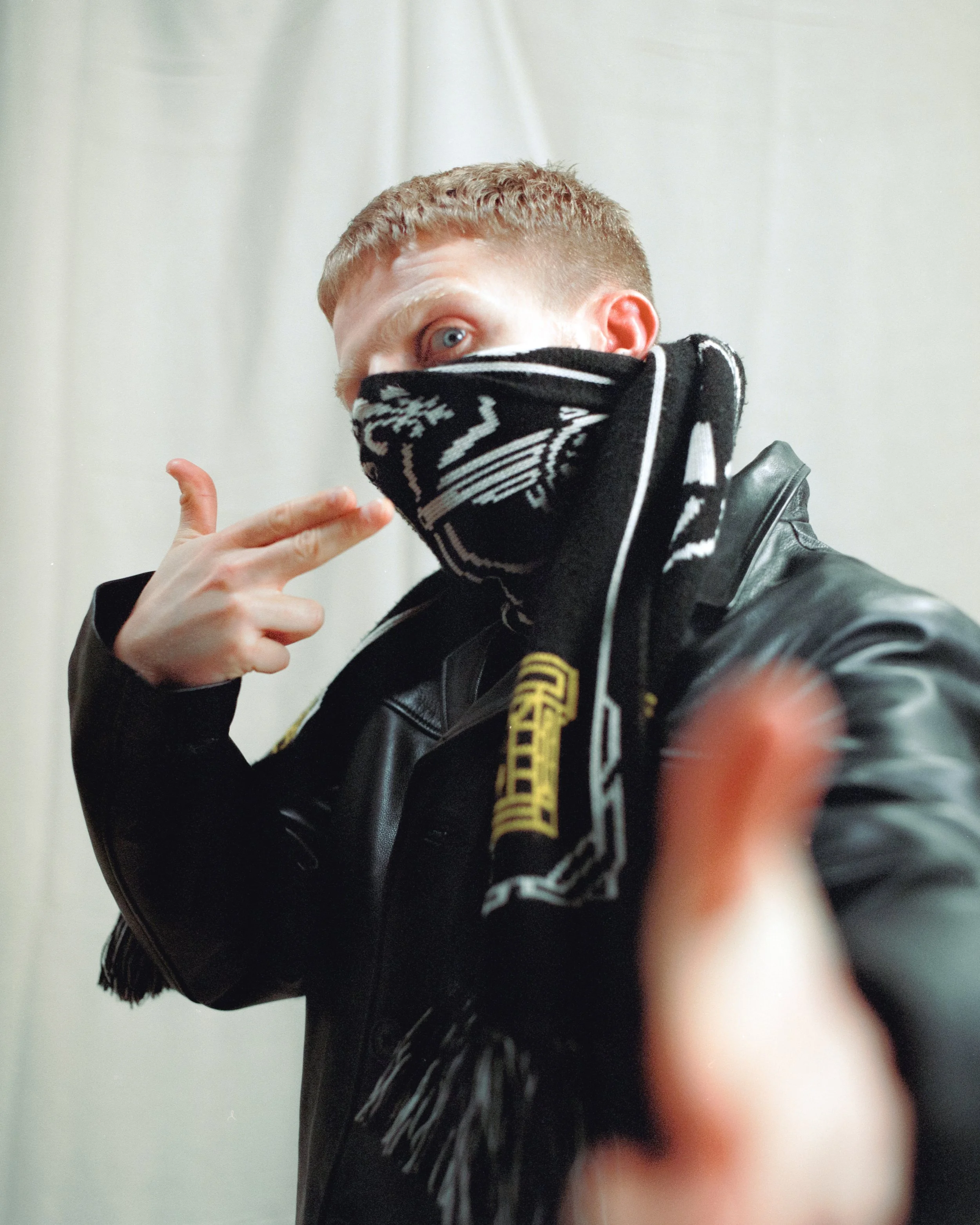
London born artist and poet Truman steps into the spotlight with Kid Raise Kid, a debut that feels less like an introduction and more like an excavation. Alongside the stark visuals for “Tell Him,” he pulls listeners into a world that’s raw, character driven and unflinchingly honest.
Working with producer Jakwob, Truman builds a jagged sonic landscape where his words do the heavy lifting. His lyricism cuts deep, unpacking childhood neglect, toxic masculinity and the realities of growing up working class in London’s underbelly. Across ten tracks, these fragments come together with precision, forming something fractured yet cohesive.
Opening track “Charley Boy” sets the tone with a warped bassline that Truman moves through with sharp, rapid fire hooks. “Beer Knights” slips into darker territory, its mood pulling his storytelling inward, while “Public House” offers a moment of warmth, paying tribute to the pub as both refuge and community anchor.
“Relapse” erupts with distorted guitars and a performance that blurs poet and rockstar, capturing the chaos of a drug fuelled spiral. On “You Can’t,” Truman leans into irony and wordplay, riding urgent drums with a knowing edge.
The album’s title speaks to its core. As Truman puts it, it comes from being “the kid who raised the kid,” shaped by neglect and systemic failure. That tension between vulnerability and defiance runs throughout.
Also known as actor Charley Palmer Rothwell, Truman sheds any sense of persona here. What emerges is an artist willing to sit in contradiction, challenge masculinity and find bleak humour in difficult truths.
With early support from WONDERLAND, CLASH and HUNGER, the momentum is building. Kid Raise Kid marks Truman as one of the most compelling new voices coming out of London right now.
Truman sat down with Wordplay Magazine to answer our infmaous 10 Questions:
1. So tell me, how did it all begin? What sparked your love for music?
My love for music started very young when I would be praised for knowing all the words to a song, ‘Never Ever’ by All Saints comes to mind, I think from that point on I was trying to imitate the songs I liked to show my Mum Or Nan. Also music was always on in the house, my Mum has gone on to become a DJ. My Great Grandad would play the piano in the pubs round the east end by ear and he was quite a force in my family so it bled down the line as well. Also I think music incorporates so many art forms from storytelling, dance, film and playing characters, all of which I adore.
2. Talk to us about what inspired your new album ‘Kid Raise Kid’?
It was a way to tell parts of my story that I had glossed over growing up. I am in some ways always trying to catch my shadow and by using the rhythm and playfulness that music brought out of me was a really useful way to do that. When I say shadow, I mean all the parts of my upbringing that were denied through pain, learnt avoidance and other ways we lie to ourselves and others. Kid Raise Kid a version of my truth about where I come from and how I’ve reacted to that environment.
3. The writing is obviously really strong across the album. How did you begin to develop your writing to get it to this level? Talk to us a bit about your writing processes.
I just wrote, I used tools from ‘The Artist Way’ by Julia Cameron and kept up a daily practice for a long time. I think like anything one endeavours to do, the more we get into a relationship with that thing, the more we understand it. Writing attests to that.
4. What prompted the move from acting to music? And how do the two worlds differ?
I wouldn’t frame it as a move, it was a continuation through a different medium, I was and am still excavating parts of myself and others. Also, like acting, musicians have the job in this world of holding mirrors up to people in creative ways. In that respect I had already been doing that for a long time, it felt like a fun, new way to explore that same role. The main thing that comes to mind in how it differs is; its process. For me anyway, music feels quicker, more explosive, more reactive. The process of acting or making a film definitely has those elements to it but it often has to go through many hands and lenses before the finished product is consumable. Music can be, at its best, very raw and unpolished.
5. How does your acting experience help you creatively as a musician?
It has given me the confidence to play in front of others, to value my ideas and expressions. It has also showed me how big creative industries work and so I have probably learnt a lot already as there seems to be quite stark cross-overs between the business side of film and music. Also my prep for acting roles is a very solo process and I’ve had to learn to enjoy that. I can put that same solo play into writing songs and prepping videos and gigs.
6. Operating in these spaces as someone from a working class background isn’t easy and is getting rarer and rarer. What are some of the obstacles you faced? And how did you overcome them?
I’m not sure if I can put my finger on it exactly but it does seem that the ones that are from the upper echelons of society are also at the upper echelons of the arts as well. To be honest, I think it’s a shame as art is made by those who find it hard to be express themselves in the “accepted world” we live and many children from working class backgrounds have been told that what they say, think and feel is wrong by the messages that they received at home, in school and then by the industries themselves, they need a place to express. And sadly they are the ones that would gift us some stunning insights into humanity if given a bigger platform. For me personally, my main obstacle was breaking the messaging received from my family around our ‘place’ and the old lie that some people are better than others that permeated the world I grew up in, that is an ongoing challenge.
7. You cover a lot of ground thematically on the album. What is it about this subject matter that inspired you creatively? And why do you think it’s important to talk on these topics?
I think having a frame of reference to work within, e.g. growing up with a teenage mum and no Dad, both of whom were dysfunctional addicts at the time, gave me a lens to talk about things I wanted to talk about. It was like making a film, I needed the filter of it being a story to then fool the shameful part of myself (the part that was told don’t talk, don’t think or feel like the working class I spoke of) by characterising all of it. It then feels less heavy to speak about and to dig deep. Also it allowed me to speak about things such as the ignorance and bigotry that springs from where I come from, from a place of noticing rather than condemning. I place myself as the puppeteer of my past, the producer of my future and at times the puppet playing the parts.
8. The production across the album is really striking, what do you look for when it comes to beats and instrumentals when you’re looking to pair something with your writing?
That’s a hard question. Jakwob produced the entire thing, he is an incredible person to know and work with because he wears so many hats, he has been a listener, mentor, contributor, manager and many more things in and out of the studio. So maybe what I’m looking for is the relationship with the producer rather than the music itself. I think something can be felt from the audience when there is chemistry behind the making. The instrumentals on the album are simple and banging which he intuited would work for the content I was writing. I’m glad you mentioned the music as it’s 50% of this album and the producers often get overlooked which is strange to me because not only are they making the music, they are often the ones getting a performance out of the artist. Big up Jakwob and all the craftsmen out there.
9. What do you like to do when you're not making music?
Connecting to people, eating, writing, dancing and trying to experience this mad world with as much presence as I can muster.
10. Name Three things you can't live without when in the studio?
My phone because it has all my ideas on it. My higher power because sometimes I pray to something for strength when I’m struggling to find a way to get to where I want performance wise. A buzzing producer (like Jakwob) who understands me and me them. Without that there is no Truman, and not a lot of art in general.