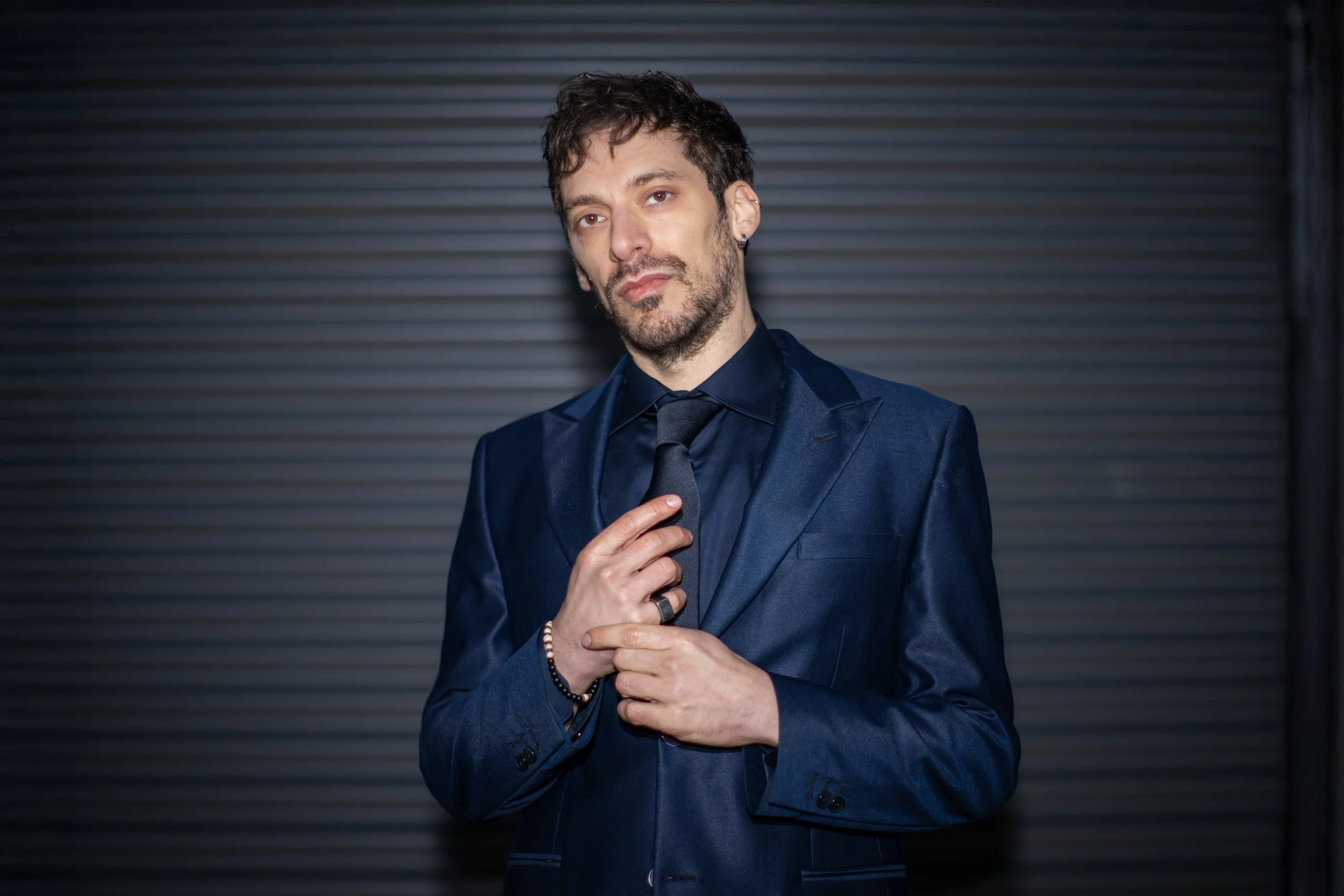
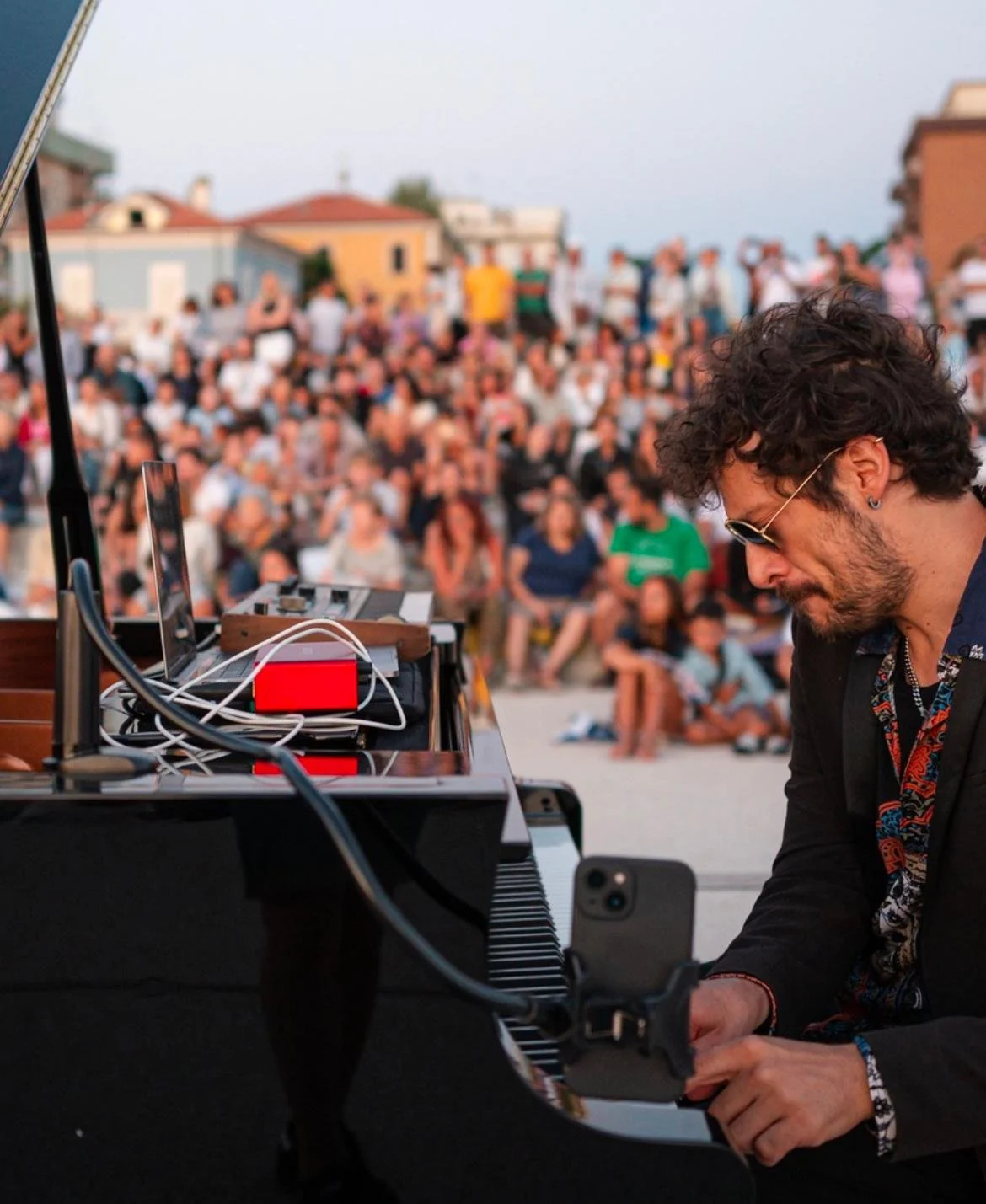
Pianist and composer and among the brightest voices of the contemporary jazz scene, Claudio Vignali creates a musical universe in constant motion together with Frank Martino on 8-string guitar, Marco Frattini on drums, and rapper Devon Miles. Further enriching the project is the extraordinary participation of Gretchen Parlato, the award winning American vocalist widely regarded as one of the most influential voices in the global jazz landscape.
FLOW is the invisible movement that runs through everything. It is chaos and light. Fall and rebirth. It is the journey of the human being within themselves. From the raw earthiness of “Flow bark” to the almost spiritual suspension of “A beautiful dream”, the album moves through pain, desire, nostalgia, disorientation, and hope, transforming each track into a stage of a deep and immersive emotional journey.
With FLOW, Claudio Vignali confirms his artistic identity: authentic, courageous, and open to change. An album that looks ahead without forgetting its roots. A living, pulsating work in constant transformation.
Claudio Vignali sat down with Wordplay Magazine to answer our infamous 10 Questions:
1. So tell me, how did it all begin? What sparked your love for music?
It started when I was a child. My parents bought a piano for my sister, and I started teaching myself to play on it. My love of jazz began when they gave me a Michel Petrucciani CD. That record made me want to hear more, and the more jazz I listened to, the more I fell in love with it. Over the years my ears kept opening up, and hip-hop became a big part of my musical world too: that is how FLOW was born.
2. Who are some artists that influence you and that you want to work with in the future?
Hip hop has shaped the way I play and write. I love how a short loop can hold your attention, and how a tiny shift in timing can change the feel of the whole groove. At the piano, that makes me think about how much I can do with a simple phrase before I even change a note.
As a pianist, Bill Evans, McCoy Tyner, Earl Hines, Erroll Garner and Art Tatum were all major influences on my development. Among more recent artists, I’d name Nikolai Kapustin, Tigran Hamasyan and Craig Taborn, though there are many more I could mention.
As for future collaborations, I’m drawn to musicians who challenge my imagination and make me hear things differently. I’d love to work with producers or beatmakers who approach rhythm from a different angle and see what happens when we bring that together with live improvisation.
3. What projects do you have coming up and can you give us any info on them?
2027 is shaping up to be a busy year on the road. Alongside FLOW, I’ll be playing solo piano, working in duos and trios, and starting some exciting new collaborations with musicians from different countries. One project will bring me back to using electronics after a long break. Some projects range from traditional to modern jazz, while others draw heavily on classical or folk music. What ties them together is the freedom to express ourselves and the pleasure of making music together.
4. How would you describe your sound?
Open and free. On FLOW, I brought the rhythmic feel of hip-hop together with the colours of classical music and the freedom of jazz improvisation. At the piano, I’m drawn to the contrast between rhythmic intensity and moments of real stillness. I like to leave room in what I write so I can take the music somewhere unexpected when I play it. Sometimes that means pushing the rhythm; sometimes it means letting a few notes speak for themselves.
5. What’s your proudest moment to date so far as an artist?
I’m proud of winning piano competitions in both jazz and classical music and of having worked with musicians I admire. But the moment that means the most to me came when I was seventeen. I realised that music would be my lifelong companion. It has carried me through some very difficult times and helped me find my direction. I’m proud that I trusted that feeling and that it still guides me today.
6. Do you have any advice for our readers who may be trying to play the mad game of music?
Study seriously, listen widely and give yourself permission to follow your curiosity. Finding your own voice takes time, and uncertainty is part of the process. Remember what made you fall in love with music in the first place. That can be what brings you back to the instrument when everything else feels difficult.
7. Are there any artists on your radar right now that we should check out?
I’d recommend checking out Devon Miles, Frank Martino and Marco Frattini, who each brought something different to FLOW. If you’re coming from hip-hop, “Flow Bark” with Devon Miles is a good place to start. For a different side of the record, try “Believe” with Gretchen Parlato. There’s an extraordinary sensitivity in the way she sings. I’m grateful to Alman Music for believing in the project and helping bring the album to life.
8. What albums are on heavy rotation on your Spotify playlist currently?
Lately I’ve been returning to a few favorites: Bach’s Six Partitas played by András Schiff, Rachmaninov Plays Rachmaninov: The Ampico Piano Recordings, and Phineas Newborn Jr. with Dennis Farnon and His Orchestra. There’s so much imagination and personality in Phineas’s playing. I can go back to these recordings again and again, and still hear something new.
9. What do you like to do when you’re not making music?
Honestly, I’m obsessed with music! But in recent years I’ve learned to step away a little. I like swimming, travelling and spending time with the people I’m closest to. Being with them gives me energy. I try to enjoy those moments for what they are, though a conversation, a place or a feeling might find its way into my playing much later.
10. Name three things you can’t live without when in the studio.
A piano I connect with, musicians who really listen, and coffee. Sometimes with a splash of sambuca! In Italy we call it caffè corretto, literally “corrected coffee”. It often becomes a running joke with the musicians when I’m touring abroad. I just try not to get too “corrected”!