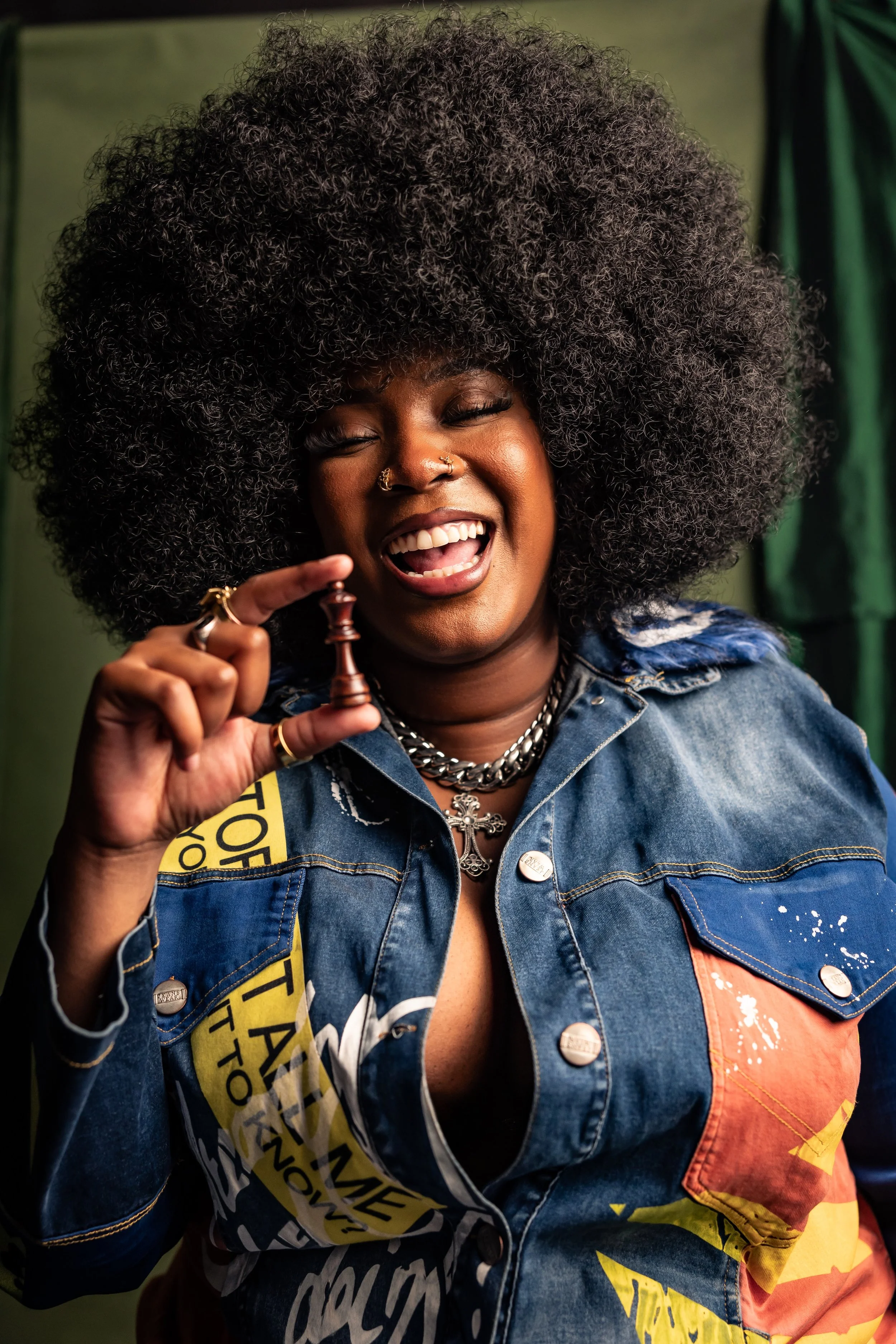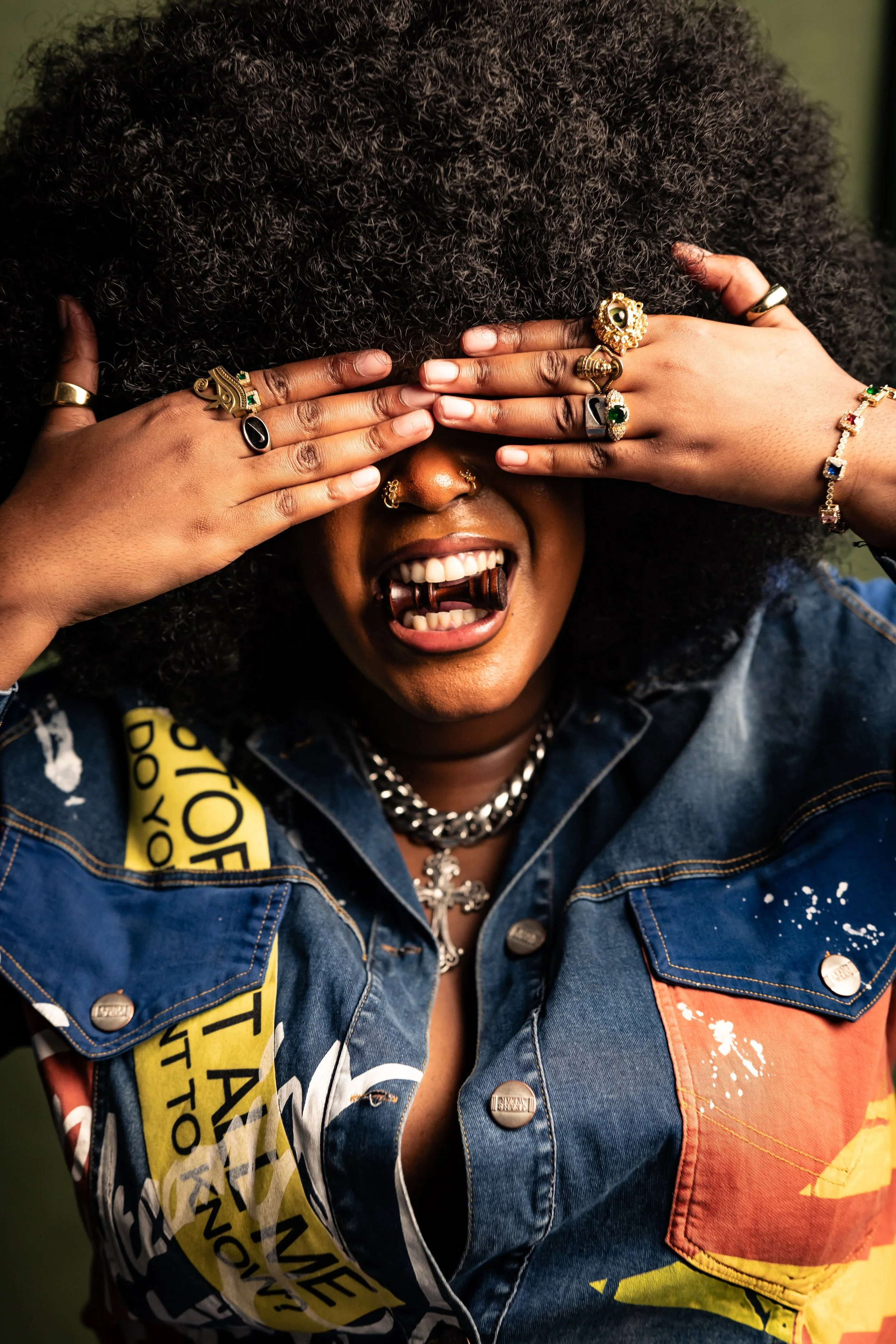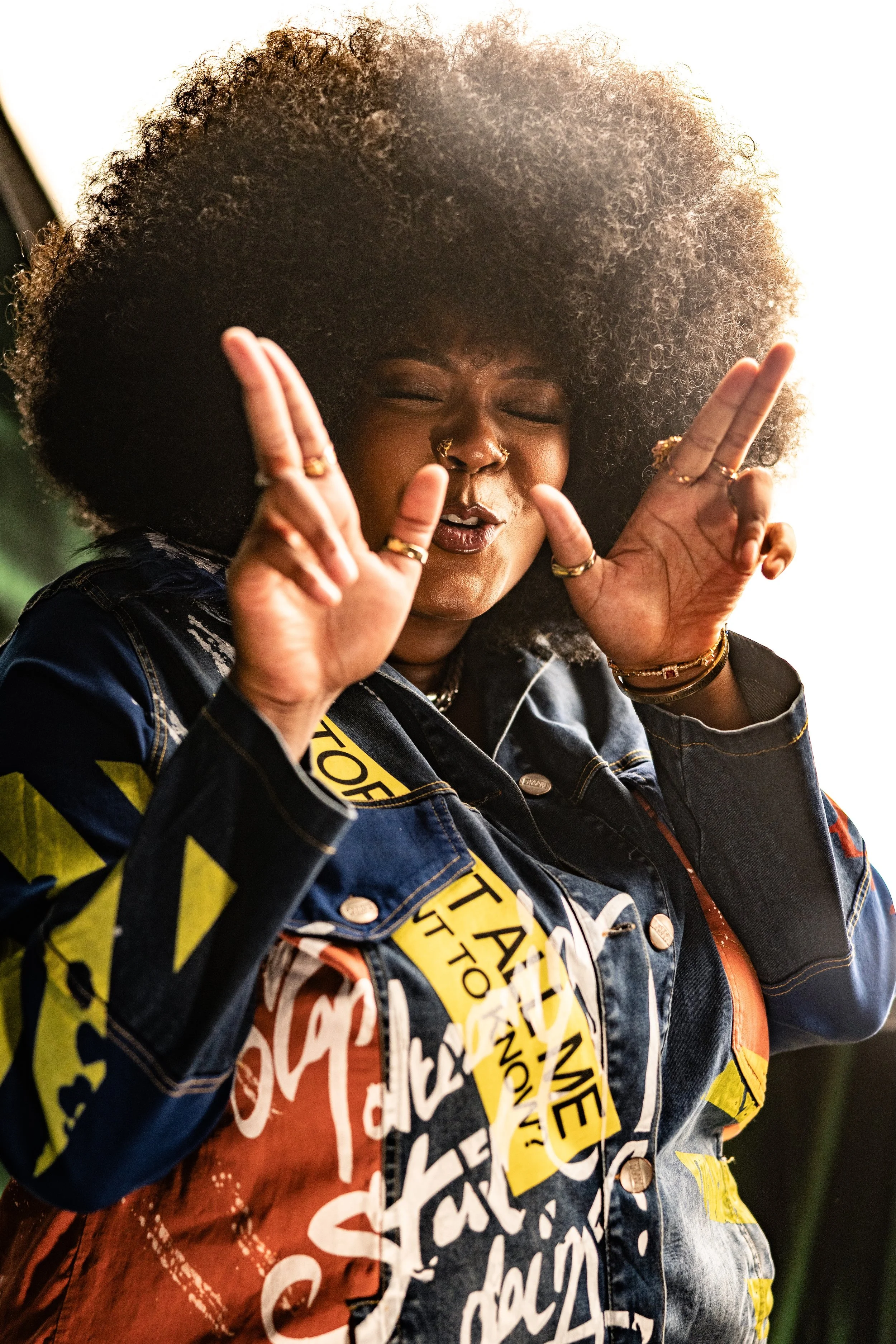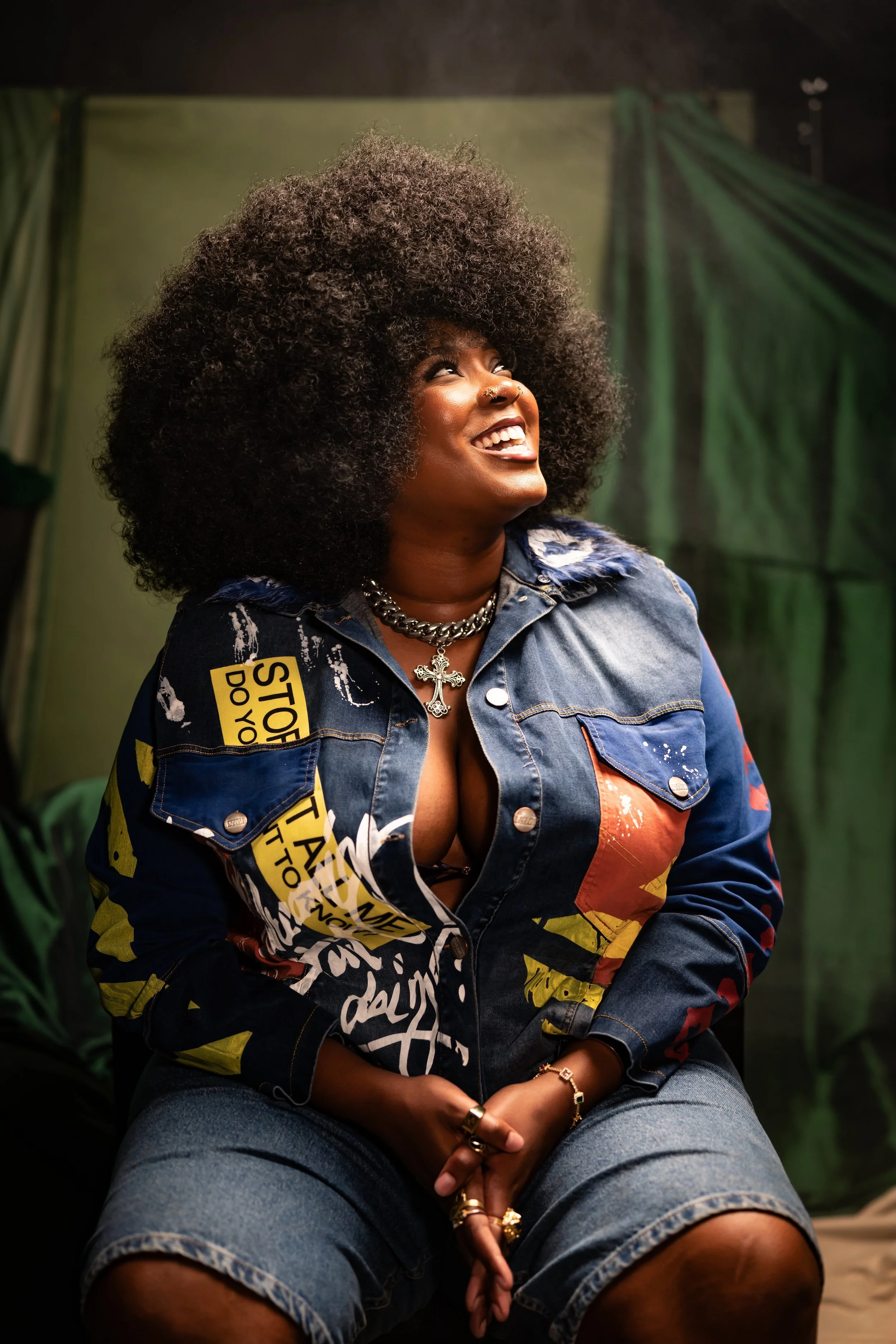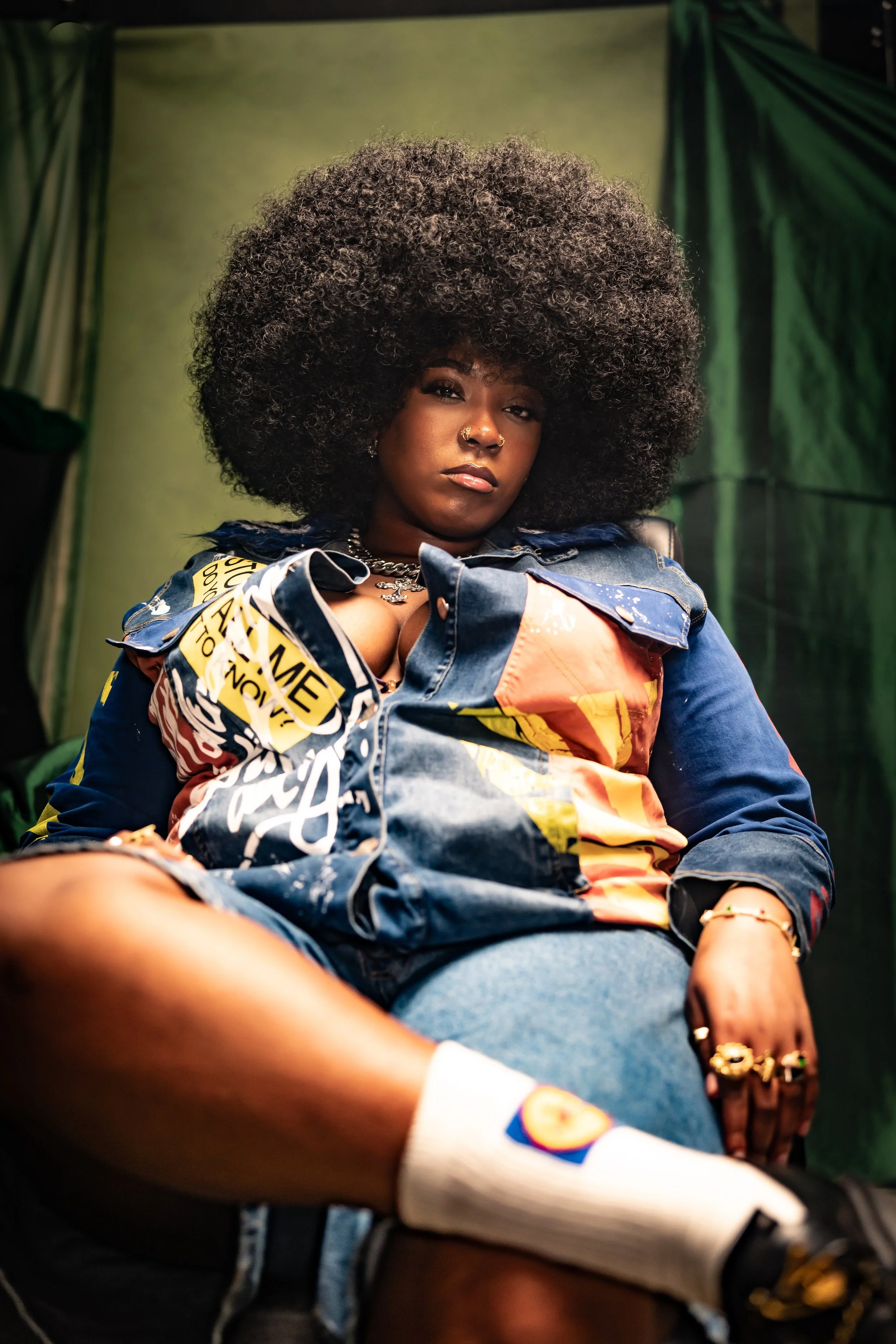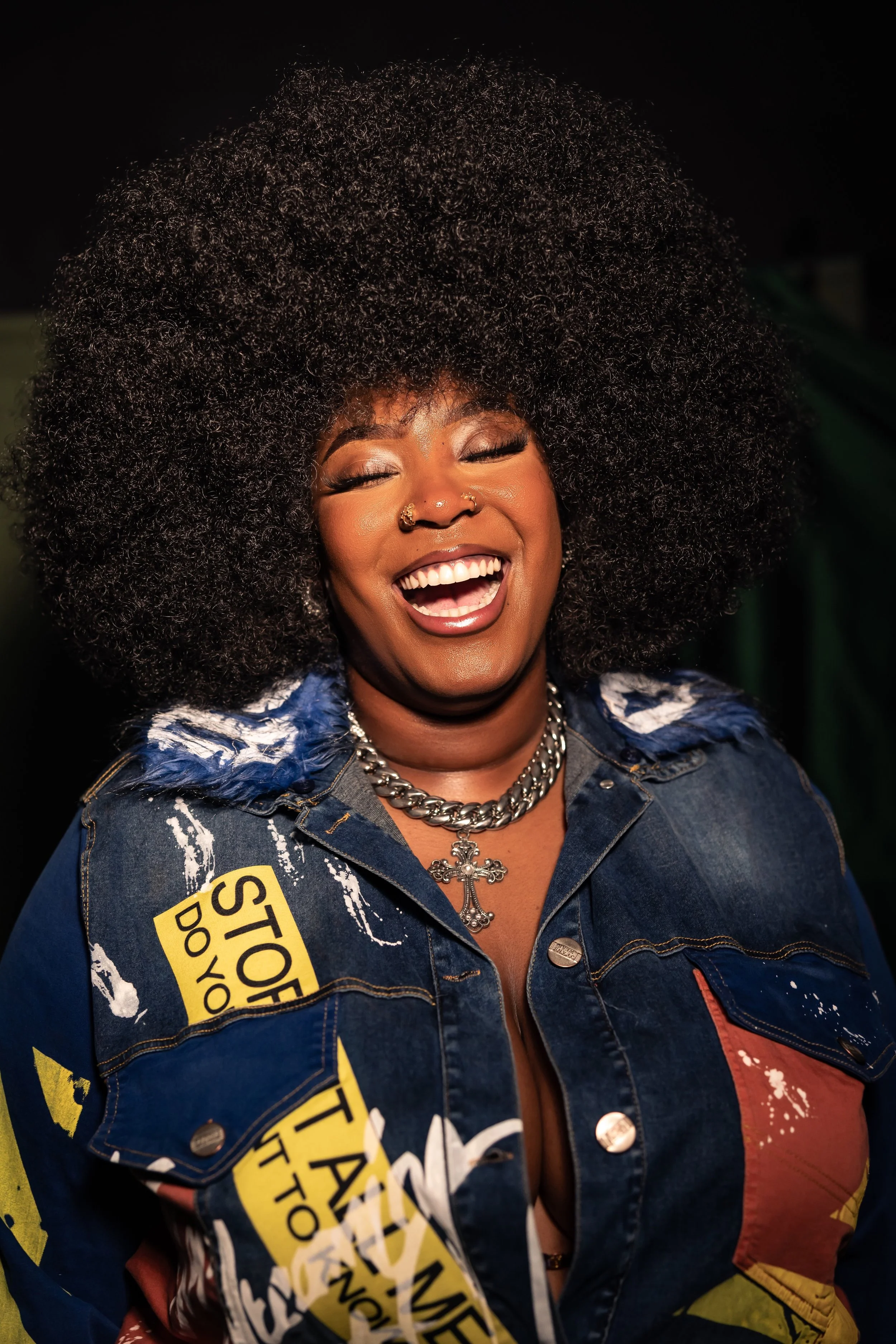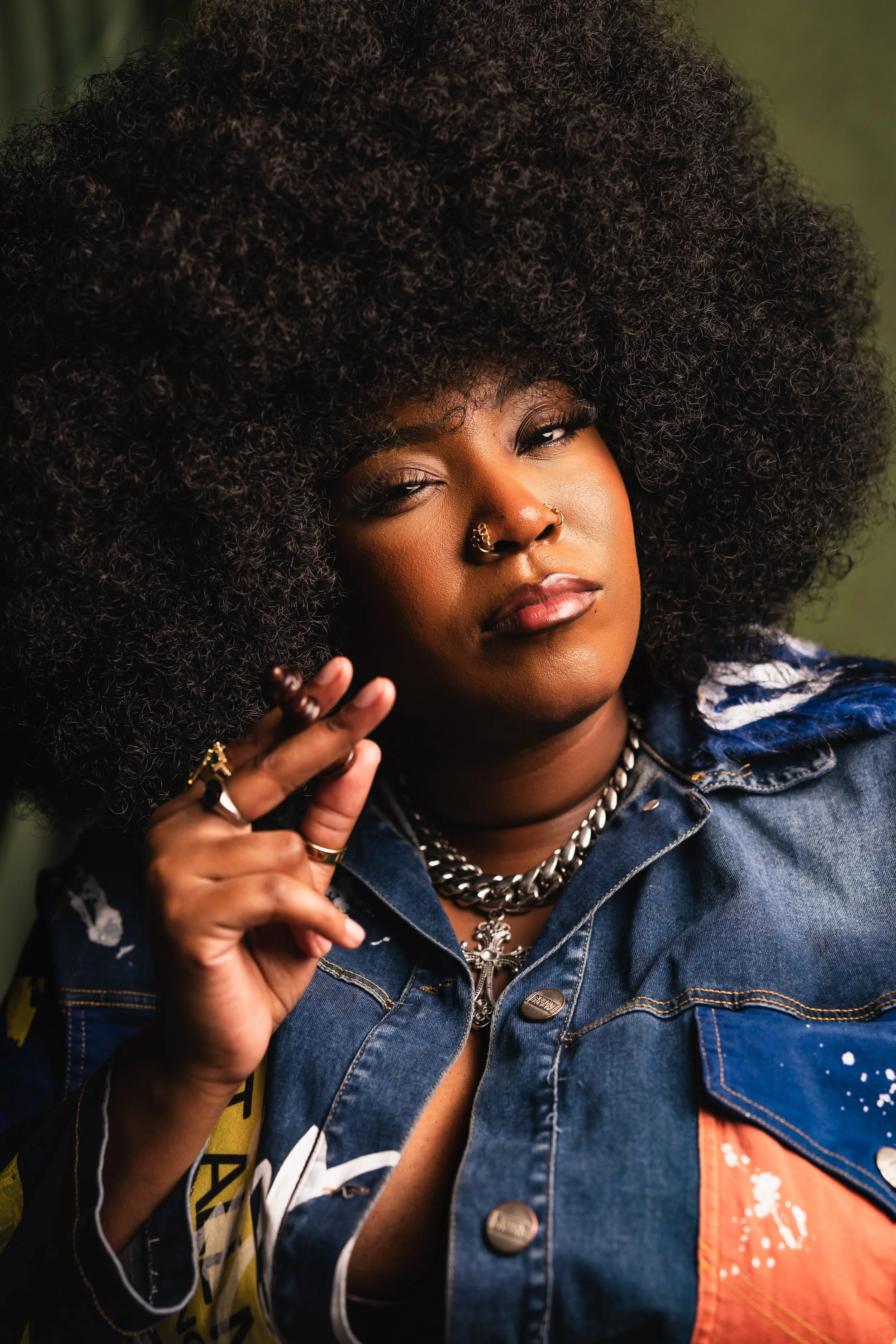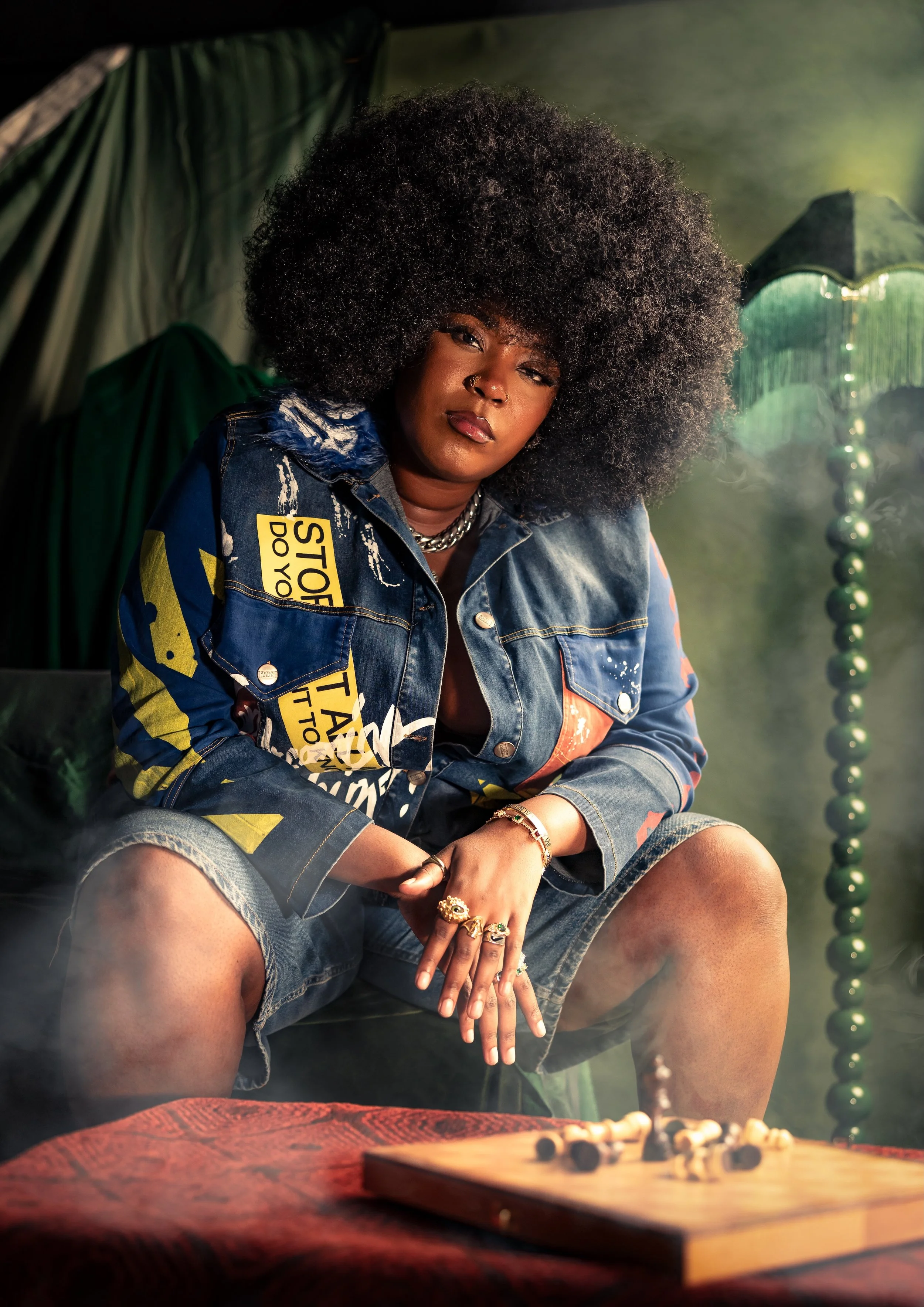
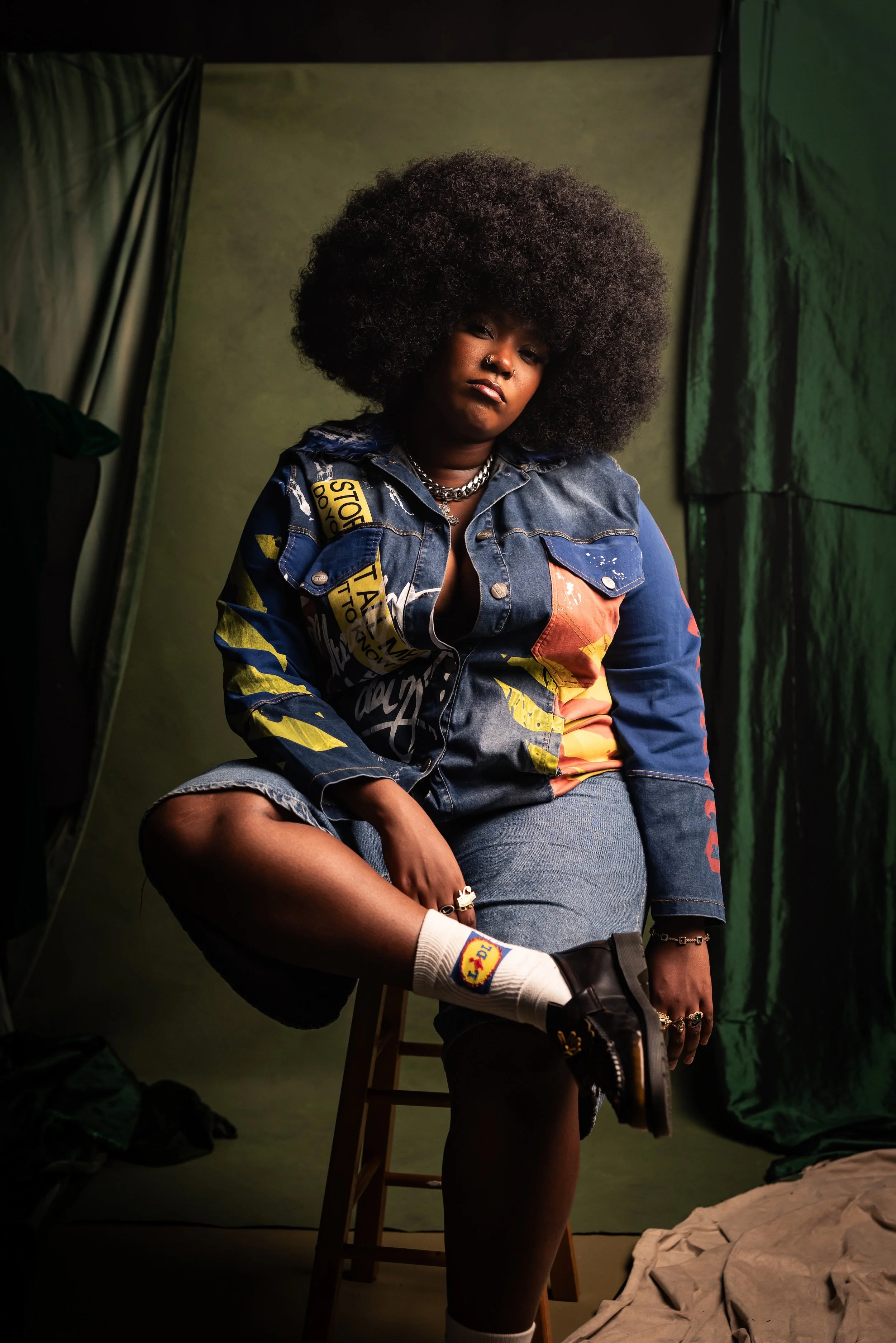
With her project Melanin Mon-ROGUE, Rozzzqween reveals the defining parts of her that exist beneath a grounded, self-confident exterior. It is not as such a doffing of the armour - more a glimpse at the life experiences that have forged and galvanised her identity.
With the eight track album, the Birmingham grown, London sculpted singer enters the room with an undeniable confidence and swagger. Inspired by the likes of Erykah Badu, Ms Dynamite and Gnarls Barkley amongst others, her velvet vocals assert a firm picture of Rozzz past, present, and future, over production that incorporates rnb, jazz, hiphop, gritty bass clefs and kickdrums throughout.
Born in Zimbabwe, Roselyn Mugabe came to this country at the age of four. Uprooting life in their homeland to escape a struggling economy, her parents moved to the UK in search of a better life for themselves, and their daughter.
For many of the “Yam Yam” kids at Rozzz’s school in West Bromwich, a small town just north of Birmingham, interactions with people from different countries and cultures may have been limited, despite the area being home to substantial minority ethnic populations.
For those in the dark (just as I was when Rozzz first explained the phrase to me), Yam Yam refers to people from the Black Country, whose colloquial phrase ‘you am’ or ‘you are’ sounds much like ‘yam’ to outsiders. At the time the Mugabe family moved there, the area was still in the grips of its heavily industrial past. While it was certainly changing through its growing multiculturalism and the ushering in of 21st century regeneration projects, factories and engineering workshops still dominated the landscape.
For Rozzz, introduction to life in England was not easy. “I was the only black kid in my class,” she explains. “And I had a translator. Fuck my life, we had a tough time in school.”
It was alienating. “The other kids didn’t really want to play with me, so I always wrote poetry, short stories, and stuff like that in my break time.”
Growing up as a young person in the noughties, she shares relatable experiences of bluetoothing songs to Sony Ericsson flip phones, kids crowded around park benches, singing along to the latest underground bangers.
“I discovered I could sing at sixteen,” she tells me. “We were all in a group, everyone was singing Katy B, On A Mission (Are you crazy? What a tune!). Then it was my turn to sing. You know how black people kind of get excited and scatter? They were like ‘Rozzz, is that you yeah?! Is that you?’. I was like ‘Oh my god, was that good?’.”
“What if I just wrote a song?” she thought to herself, at some point around the age of nineteen, or twenty. “Then I just fell in love with it. I fell in love with the studio, the creativity - It was like therapy.”
She quickly became a self professed “studio rat”. Recording and releasing tracks on the same day, rushing them out so she could write the next set of lyrics, record the next vocals. “I had no idea what mixing and mastering was at the time,” she explains. “Didn’t care, I was just putting it out there.”
Artists such as Truemendous and Janelle Antoneshia were hugely influential in helping Rozzz carve out her sound. She was given features, and encouraged to continue doing her thing. “I didn’t think what I was doing at the time was of any value,” she admits. “Birmingham’s infrastructure is so poor. There are incredible musicians who won't make it, unless they move to London, because there is nothing there.”
While artists were showing their support and offering her opportunities to collaborate and make music, Rozzz had settled into the beginnings of a career as a nurse. But with her affinity for songwriting on the rise, she was in the process of manifesting an entirely new direction. “When I moved to London, that’s when things changed,” she continues. “I was 24, and I knew that I wanted to dedicate my life to music. I dropped out of nursing. As you can imagine my African parents were horrified.”
“‘So you want to play with microphones?’,” Rozzz recalls her mother saying the day she told her she wanted to quit nursing and pursue a career in music. “I did not travel from Zimbabwe to the UK so you can play with microphones.”
Rather than deterring Rozzz from chasing her dream, her mother’s disapproval had the opposite effect. It made her more determined, more set on realising her potential and making it as a musician. “I kind of made a point to be like ‘Okay, music has to work, because mum’s not on board. So babe, you have to do this’.”
So with £30 to her name, and the pots and pans bought for her by her mother (“because she's my mum, and she still loves me,” she adds), Rozzz settled into life in the capital, with not so much of a plan, more than a feeling of what she needed to do.
It was around this time that her first manager decided her name for her. “I had this manager called Bigs,” she explains. “He had these massive gold teeth, huge guy. ‘Your name should be queen, man. You’re a queen, Rozzz. Rozzzqween’. I went home and changed it that day.”
With her name etched into the proverbial concrete by Bigs, Rozz was ready to show the world what she was really about, and with Melanin Mon-ROGUE, it feels as though the different parts of her are aligning to tell the same story.
With tracks like No One Understands, Rozzz portrays a tale of love and its challenges, with her own self awareness being the everpresent theme. Audrey is about the harsh reality of how addiction and a troubled path can lead some of us away from the light. He Should Know brings back the romantic mystique with which Rozzzqween imbues her music.
One Night Only, is packed with the energy of a good night out, a nod to the importance of enjoying life, dance, and movement. “I grew up on bassline and garage,” Rozzz explains. “It’s fun, it’s expressive. Dance music is just another shade of me.”
The final track is a statement. After everything Rozzz has told me about leaving Zimbabwe, growing up between cultures, and navigating her parents’ expectations, Papa draws our attention back to family. It places those foundations alongside the woman she has become, and the choices she has made to arrive here.
The track puts Rozzzqween the rapper to work, speaks on the life she led growing up, and her father’s role in guiding her through it. “I did a song called Family Ties, about my dad’s alcoholism,” she explains. “But my dad also pushed me, he showed up. My god he showed up.”
“There used to be a programme in Birmingham called the Drum. We wrote poetry, sang songs, and learned how to structure them. My dad would pick me up every Friday, and drive me there in his crusty [Renault] Megane. I’m so glad he did that.”
And so are we. If the record is a glimpse beneath the armour, what it reveals is someone who has spent a long time becoming comfortable in her own skin. It reveals the value of her relationships, and the importance of her experiences.
From West Bromwich to London, from nursing to music, from poetry in the playground to a debut album, Rozzzqween has taken every version of herself along for the ride. Melanin Mon-ROGUE is the sound of her finally owning all of them.
Words: Tyrone Bulger
Pictures: Dom Le Brun